AI in Supplier Management: Transforming Automotive Manufacturing Supply Chains
Automotive manufacturing operates within one of the most complex supplier ecosystems in discrete manufacturing, with vehicle programs incorporating 15,000-30,000 unique components sourced from multi-tier supplier networks spanning dozens of countries. The interdependencies between OEMs, Tier 1 system integrators, and Tier 2/Tier 3 component suppliers create procurement challenges that exceed those in most other manufacturing sectors. A single quality issue or delivery failure at a lower-tier supplier can idle final assembly lines worth $2-3 million per hour in lost production, making supplier management a critical competitive differentiator for automotive manufacturers.
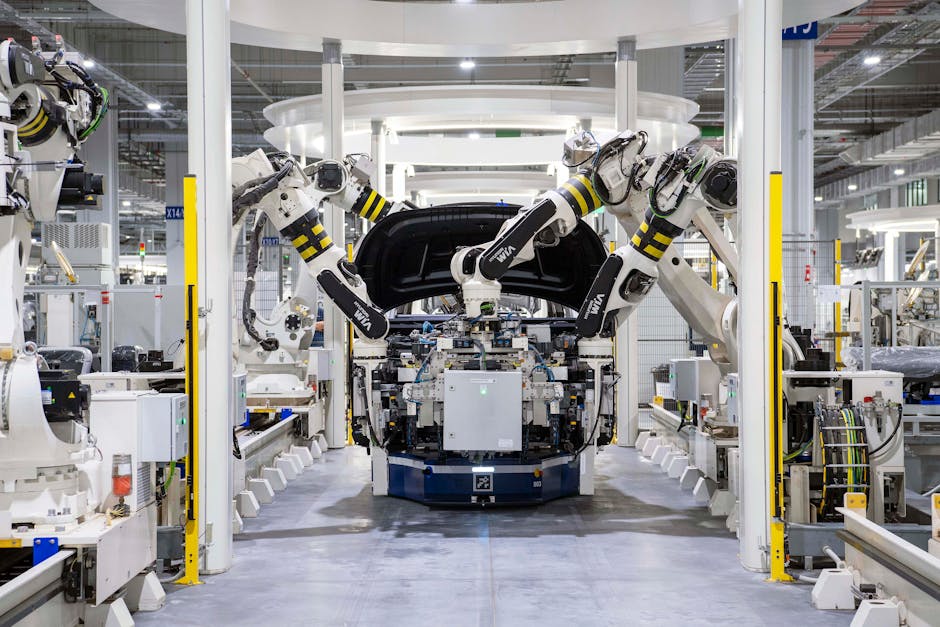
Traditional supplier management approaches built around quarterly business reviews and monthly scorecards cannot keep pace with the velocity and complexity of modern automotive supply chains. AI in Supplier Management addresses these limitations by providing real-time visibility, predictive intelligence, and automated decision support across the entire supplier ecosystem. Leading automotive manufacturers implementing these capabilities are achieving 30-45% reductions in supplier-driven production disruptions while simultaneously cutting direct material costs by 6-9% through improved sourcing decisions and contract management.
The Automotive Supplier Management Challenge: Volume, Velocity, and Complexity
Automotive OEMs manage supplier relationships across multiple vehicle platforms, each with distinct BOM requirements and production volumes. A mid-sized automotive manufacturer producing 500,000 vehicles annually across three platforms might manage 800-1200 active Tier 1 suppliers, with the extended supplier network including 3,000-5,000 lower-tier suppliers providing critical components. Each supplier relationship generates extensive data: purchase orders and blanket PO releases, PPAP documentation, ongoing quality inspection results, OTD and OTIF performance metrics, and continuous cost change requests.
The procurement challenge intensifies during new product introduction cycles. NPI programs require supplier readiness validation across hundreds of new or modified components, with PPAP processes confirming that each supplier can meet dimensional specifications, material requirements, and production volume targets. Manual coordination of NPI supplier readiness across 200-400 components per vehicle program creates bottlenecks that frequently delay launch timing, with each month of delay potentially costing $20-50 million in delayed revenue and continued current-model incentive spending.
Quality requirements in automotive exceed most other discrete manufacturing sectors due to safety implications and warranty exposure. While electronics manufacturers might target PPM defect rates below 500, automotive manufacturers pursue PPM targets below 100 for safety-critical components, with zero-defect expectations for certain systems. Supplier quality engineering teams conduct regular audits and CAPA processes, but reactive quality management still allows defects to reach production lines, creating expensive disruptions and potential field failures.
Lead Time and Inventory Optimization Across Global Supply Chains
Automotive supply chains span global networks, with semiconductor suppliers in Taiwan, wiring harness manufacturers in Mexico, and steel suppliers across multiple regions. Lead times range from 4-6 weeks for locally sourced commodity components to 16-20 weeks for specialized electronics and semiconductors. This lead time variability, combined with demand uncertainty from dealer orders and production schedule changes, forces automotive manufacturers to maintain substantial safety stock across thousands of SKUs.
Traditional MRP systems use static lead times and safety stock calculations, resulting in inventory levels that tie up 25-35% more working capital than optimal. When demand surges unexpectedly or supplier delays occur, the safety stock proves insufficient, leading to line changeovers, production schedule disruptions, and expedited freight costs. Automotive manufacturers report that supplier delivery variability accounts for 40-60% of unplanned production schedule changes, with each change carrying costs of $50,000-$200,000 when considering line changeover labor, logistics coordination, and efficiency losses.
AI-Powered Supplier Performance Management for Automotive Manufacturing
AI in Supplier Management transforms automotive supplier oversight from periodic review to continuous monitoring with predictive intelligence. Machine learning models ingest real-time data streams from supplier delivery confirmations, quality inspection results, production schedule updates, and external risk signals to generate dynamic supplier performance scores that reflect current capability and near-term risk.
The system automatically identifies performance degradation patterns that precede serious disruptions. When a Tier 1 supplier's OTD performance drops from 95% to 88% over a three-week period, the AI platform analyzes contributing factors, determines whether the decline reflects temporary issues or systemic problems, and generates risk alerts with recommended actions. If the root cause traces to a lower-tier supplier, the system surfaces that dependency, enabling procurement to engage both the Tier 1 supplier and the underlying Tier 2/Tier 3 source.
Real-Time Quality Monitoring and Predictive Defect Detection
Automotive supplier quality management generates massive data volumes through incoming inspection, in-process quality checks, and field performance tracking. A mid-sized automotive manufacturer might conduct 50,000-100,000 supplier quality inspections annually, with each inspection capturing 10-30 measurement points. AI systems analyze this quality data in real-time, identifying statistical trends that indicate degrading supplier process capability before defect rates exceed control limits.
The predictive quality capabilities extend beyond internal inspection data. When integrated with supplier manufacturing systems, AI platforms analyze supplier process control data, equipment health signals, and production volume patterns to identify conditions correlated with increased defect risk. If a supplier's injection molding process shows increasing cycle time variability or temperature deviations, the AI system flags elevated defect risk even before the supplier ships components, enabling proactive intervention.
Automotive manufacturers implementing AI-powered Supplier Quality Management report 35-55% reductions in supplier quality escapes reaching production lines. PPM defect rates improve from typical ranges of 300-500 down to 100-200 within 18-24 months, with corresponding reductions in line stoppages, rework costs, and warranty claims. The quality improvements also enable manufacturers to reduce incoming inspection intensity, reallocating quality engineering resources from detection to prevention activities like supplier process audits and CAPA root cause analysis.
Strategic Sourcing and Cost Optimization in Automotive Procurement
Automotive manufacturers face continuous margin pressure from competitive market dynamics and shifting consumer preferences. Raw material cost volatility in steel, aluminum, copper, and resins directly impacts component pricing, with commodity price swings of 20-40% within a single year creating planning uncertainty. AI platforms address this challenge through predictive cost modeling that analyzes commodity indices, supplier pricing history, and macroeconomic indicators to forecast component cost trends 6-12 months ahead.
The predictive pricing intelligence enables strategic sourcing decisions that optimize cost while managing supply risk. When AI models forecast steel price increases over the next two quarters, procurement can accelerate contract negotiations with steel-intensive component suppliers, locking in current pricing before escalation clauses trigger. Conversely, when commodity costs trend downward, procurement can time contract renewals to capture maximum savings. Automotive manufacturers using AI-driven cost forecasting report 4-7% improvements in direct material cost performance compared to manual forecasting approaches.
Should-Cost Modeling and Supplier Negotiation Support
Automotive supplier negotiations benefit significantly from AI-powered should-cost analysis. AI development platforms enable sophisticated cost models that decompose component pricing into material costs, labor content, overhead allocation, and supplier margin. When suppliers submit pricing proposals, AI systems compare quoted prices against should-cost models, automatically flagging quotes that exceed expected costs by defined thresholds.
The detailed cost breakdowns provide procurement teams with data-backed negotiation leverage. If a supplier quotes $45 for a component where should-cost analysis indicates $38-41 represents a fair price including reasonable margin, procurement enters negotiations with specific cost element challenges rather than generic requests for price reductions. Automotive manufacturers report that AI-supported negotiations achieve 3-5% better pricing outcomes compared to negotiations based solely on historical pricing or competitive benchmarking.
The sourcing optimization extends to supply base management decisions. AI platforms analyze total cost of ownership across quality performance, delivery reliability, responsiveness, and price to generate TCO rankings that inform supplier selection and consolidation strategies. When sourcing decisions prioritize lowest piece price without considering quality and delivery performance, total cost often increases due to quality escapes, expedited freight, and production disruptions. TCO-based sourcing supported by AI analysis enables automotive manufacturers to reduce supply base complexity by 15-25% while improving overall supplier performance and decreasing total cost by 5-8%.
NPI Supplier Readiness and PPAP Process Optimization
New vehicle program launches represent critical milestones for automotive manufacturers, with launch delays directly impacting revenue targets and market competitiveness. Supplier readiness across hundreds of new or modified components determines whether NPI programs meet launch timing, yet traditional PPAP tracking relies on spreadsheets and email-based communication that provide limited visibility into program status and risk.
AI in Supplier Management transforms NPI supplier readiness through automated PPAP tracking, risk prediction, and proactive intervention management. The system ingests PPAP submission data, tracks progress against program milestones, and applies machine learning models that predict which suppliers face elevated risk of PPAP delays based on historical supplier performance, component complexity, and current progress patterns.
When a supplier responsible for 12 PPAP submissions shows delayed progress on initial submissions, AI models assess the likelihood of meeting subsequent PPAP deadlines and overall program timing. If the risk exceeds acceptable thresholds, the system generates alerts to supplier quality engineering and procurement teams, triggering proactive engagement with the supplier to resolve capability gaps before delays cascade across the program. Automotive manufacturers using AI-powered NPI supplier management report 30-50% reductions in supplier-driven launch delays and 20-35% improvements in on-time PPAP completion rates.
Multi-Tier Supplier Visibility and Risk Management
Automotive supply chain disruptions increasingly originate at Tier 2 and Tier 3 suppliers, where OEMs have limited direct visibility and influence. A semiconductor shortage at a Tier 3 supplier can disrupt Tier 1 system deliveries, idling final assembly lines despite strong direct supplier relationships. Traditional supplier management focuses on Tier 1 relationships, leaving automotive manufacturers blind to lower-tier risks until disruptions surface.
AI platforms address this gap by aggregating multi-tier supplier data, creating visibility into dependencies and risks across the extended supply network. When integrated with Tier 1 supplier systems, AI solutions track lower-tier supplier performance, financial health, and capacity utilization, identifying risks before they impact Tier 1 deliveries. If a Tier 2 semiconductor supplier shows declining OTD performance or capacity constraints, the AI system flags the risk to relevant Tier 1 suppliers and OEM procurement teams, enabling early intervention.
The multi-tier visibility becomes especially critical during supply disruptions. When a natural disaster, geopolitical event, or other disruption impacts a specific geographic region, AI systems automatically identify all affected suppliers across the tier structure, assess component criticality and inventory positions, and prioritize response actions. Automotive manufacturers with multi-tier AI-powered risk management report 40-60% faster disruption response and 50-70% reductions in production line downtime resulting from lower-tier supplier issues.
Contract Management and Blanket PO Optimization
Automotive procurement relies heavily on long-term agreements and blanket purchase orders that establish pricing, quality requirements, and delivery terms across vehicle program lifecycles. A single vehicle platform might have 300-500 active blanket POs, each covering multiple years and millions of dollars in component purchases. Managing contract terms, pricing escalation clauses, volume commitments, and performance guarantees manually creates compliance risks and missed opportunities for supplier performance enforcement.
AI-powered contract management extracts key terms from supplier agreements, automatically tracking pricing clauses, volume commitments, MOQ requirements, and performance guarantees. When supplier delivery performance falls below contractual OTIF commitments, the system automatically calculates applicable service level penalties and flags the issue for procurement action. Automotive manufacturers implementing these capabilities identify 2-3x more contractual performance violations, recovering $500,000-$2 million annually in supplier credits and penalties that previously went undetected.
Blanket PO release optimization represents another high-value application. AI systems analyze demand forecasts, production schedules, supplier lead times, and inventory positions to generate optimal release quantities and timing for each blanket PO. The optimization balances competing objectives: minimizing inventory carrying costs, respecting supplier MOQ requirements, and maintaining adequate safety stock to absorb demand variability and supplier delivery uncertainty. Automotive manufacturers using AI-driven blanket PO management reduce inventory carrying costs by 20-30% while improving production schedule adherence by 15-25%.
Procurement Automation for Transactional Efficiency
Automotive procurement teams manage thousands of purchase requisitions and POs monthly, with transactional processing consuming 50-70% of procurement capacity. Purchase requisition approval routing, PO creation, three-way matching, and invoice exception resolution represent necessary but low-value activities that divert procurement resources from strategic supplier development and cost reduction initiatives.
Procurement Automation powered by AI streamlines these transactional workflows, automatically processing routine transactions while routing exceptions requiring human judgment. When production planning generates a purchase requisition for a component covered by an existing blanket PO, the AI system automatically verifies budget availability, routes the requisition through approval workflows based on dollar thresholds and material categories, generates the PO release upon approval, and confirms the transaction to production planning. The entire process completes in minutes rather than the 2-4 days typical of manual processing.
Invoice processing benefits similarly from AI automation. The system performs three-way matching between PO terms, receiving confirmations, and supplier invoices, automatically approving invoices that match within defined tolerances. When discrepancies occur, natural language processing analyzes the variance type, automatically resolving simple errors like unit of measure mismatches while routing complex exceptions with full context and recommended resolutions. Automotive manufacturers implementing comprehensive Purchase Order Automation report 50-70% reductions in requisition-to-PO cycle time and 60-80% reductions in invoice processing time, translating to 30-40% decreases in procurement operation costs.
Conclusion
The automotive manufacturing sector's complex, high-velocity supplier ecosystems demand management capabilities that exceed human capacity operating with traditional tools. AI in Supplier Management addresses this gap through real-time performance monitoring, predictive risk intelligence, and automated decision support across quality oversight, cost optimization, NPI supplier readiness, and procurement operations. Leading automotive manufacturers implementing these capabilities report transformative results: 30-45% reductions in supplier-driven production disruptions, 6-9% direct material cost savings, 35-55% improvements in supplier quality performance, and 30-40% gains in procurement operational efficiency.
The integration of supplier performance analytics, quality management, strategic sourcing, and Purchase Order Automation creates end-to-end intelligent procurement operations that deliver sustained competitive advantage. As automotive manufacturers face ongoing pressures from electrification transitions, semiconductor supply constraints, and global supply chain volatility, AI-powered supplier management capabilities increasingly separate industry leaders from followers. The organizations that move decisively to implement these technologies will establish supplier performance and cost advantages that competitors struggle to match, fundamentally reshaping competitive dynamics in automotive manufacturing.

Comments
Post a Comment