AI Use Cases in Construction: Lessons from Projects Under Pressure
My clearest lessons about AI Use Cases in Construction did not come from polished demonstrations. They came from projects under pressure: a commercial tower whose concrete quantities kept moving, an infrastructure package waiting on late design information, and a closeout team reconstructing decisions from scattered RFIs, submittals, and daily reports. Those jobs taught me that artificial intelligence creates value only when it is attached to a defined construction decision, supplied with controlled project data, and placed inside the workflow of the people accountable for the outcome.
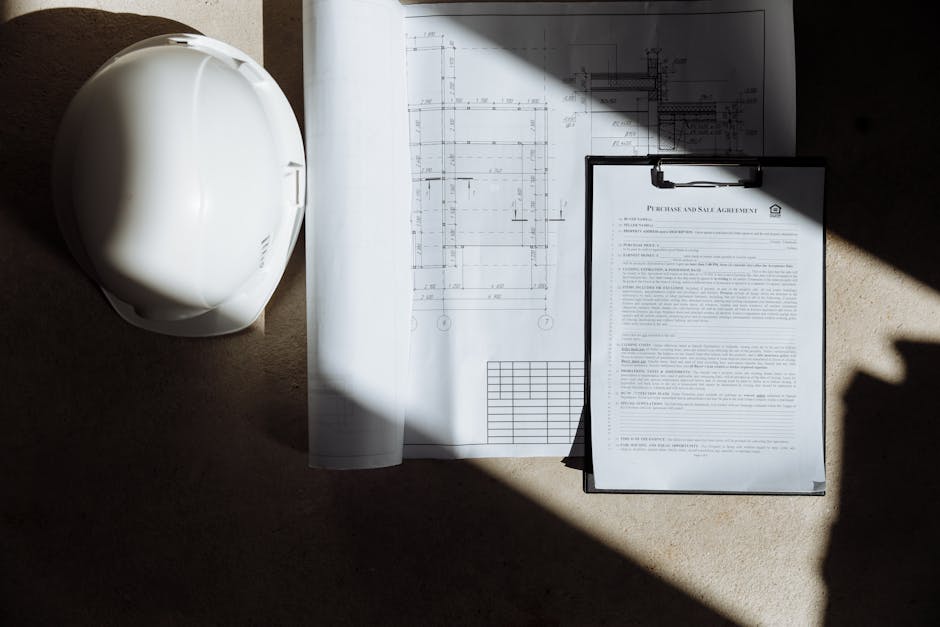
A useful overview of AI Use Cases in Construction should therefore be read through a delivery lens. The important question is not whether a model can recognize drawings, summarize documents, or predict a delay in isolation. The question is whether that capability helps an estimator close a scope gap, enables a superintendent to protect the look-ahead schedule, gives project controls earlier evidence of margin leakage, or helps commissioning teams produce a defensible turnover package.
The Estimate That Looked Accurate Until Bid Leveling
On one large commercial bid, the estimate appeared disciplined. The drawing register was current, quantity takeoff sheets were complete, and subcontractor quotations had been normalized into a bid-leveling workbook. Yet the apparent precision hid a familiar weakness: the architectural set, structural set, specifications, and trade clarifications did not describe scope in exactly the same way. Several edge conditions were included in one subcontractor's price, excluded by another, and only implied in our internal estimate. The gap was not a calculation error; it was a reconciliation failure.
This is where AI-Powered Quantity Takeoff can be valuable. Computer vision can identify repeated drawing objects, measure areas and lengths, associate assemblies with locations, and flag material changes between revisions. Language models can compare estimate assumptions with specification clauses and subcontractor exclusions. The estimator still owns the bill of quantities, production rates, waste factors, and commercial judgment, but the system can expose inconsistencies before they become buyout losses.
The lesson was that automated quantities should never arrive as an unexplained total. Estimators need sheet references, model element identifiers, revision status, measurement rules, confidence levels, and a visible audit trail. A quantity without provenance is difficult to challenge and dangerous to price. We obtained better results when the tool produced an exception queue—missing classifications, unusual variance by level, duplicated objects, and unmatched scope—rather than pretending to replace drawing review.
Among the most practical AI Use Cases in Construction, estimate assurance deserves priority because errors at tender stage become expensive commitments. Material volatility makes that assurance even more important. Historical pricing can be combined with supplier quotations, escalation scenarios, lead-time signals, and project-specific logistics constraints, but the output should remain a range with stated assumptions. A single predicted price can create false confidence in a market where steel, electrical equipment, and specialist systems may move before award.
Design Coordination Taught Us to Prioritize Buildability, Not Clash Counts
Another project had an impressive BIM coordination process and an unhelpful volume of clashes. The federated model generated thousands of intersections, many of which were duplicates, tolerable conditions, or issues that could be resolved through ordinary trade detailing. Coordination meetings became exercises in sorting rather than decision-making. Meanwhile, a smaller number of high-consequence problems—access clearances, installation sequences, temporary works conflicts, and maintainability constraints—needed attention from field engineering.
BIM Constructability Analysis becomes useful when it ranks issues by construction consequence. An intelligent workflow can group related clashes, identify the affected systems and zones, compare them with access requirements, and estimate whether the condition threatens a critical-path activity. It can also search prior coordination decisions for analogous resolutions. This changes the conversation from “How many clashes are open?” to “Which unresolved conditions will prevent the next work package from being released?”
The model must be connected to real delivery information. A geometric conflict in an area scheduled six months away is rarely as urgent as an incomplete penetration detail affecting next week's deck pour. We learned to combine model status, RFI aging, submittal approval, procurement lead times, and the look-ahead schedule. That allowed VDC coordinators, design managers, and superintendents to focus on constraints that could actually stop production.
This experience also exposed a limit common to AI Use Cases in Construction: project models are not automatically trustworthy because they are detailed. Elements may be modeled at different levels of development, coordinates can drift, fabrication content may lag design intent, and temporary works may be absent. Every recommendation needs to disclose which model version, drawing revision, specification section, and coordination rule produced it.
What the Schedule Missed Until the Field Reported It
On an infrastructure package, the baseline schedule showed acceptable float while crews were steadily losing productive time. The critical path method logic was not wrong, but progress updates were too coarse to reveal the emerging problem. Daily reports described access restrictions, incomplete preceding work, inspection waits, and equipment conflicts in free text. Installed quantities sat in separate spreadsheets. By the time those signals affected the monthly update, recovery options had narrowed.
AI Project Controls can connect those weak signals. Natural-language processing can classify daily-report narratives, extract delay causes, and relate them to activities, work areas, responsible parties, and change events. Forecasting models can compare planned production with installed quantities, labor hours, percent complete, and historical crew performance. Used properly, these capabilities improve the cost-to-complete forecast and reveal schedule performance index deterioration before the reporting cycle makes it obvious.
We learned not to treat prediction as proof. A forecast that a milestone will slip is a prompt for investigation, not an automatic schedule update. The project controls engineer must examine logic ties, calendars, actual starts, remaining durations, and field constraints. Similarly, earned value management becomes misleading if progress rules reward partially started work without credible installed-quantity evidence.
The best AI Use Cases in Construction create a short feedback loop. A superintendent receives a specific warning that duct installation in Zone C is below the planned rate, sees the related access and submittal constraints, and can adjust the next look-ahead schedule. The team then records whether the intervention worked. That closed loop is far more valuable than a colorful dashboard that reports yesterday's variance without supporting tomorrow's production decision.
Change Control Exposed the Cost of Fragmented Project Data
One of the most expensive lessons came from a change event that everyone recognized but nobody assembled promptly. A late design clarification altered routing, affected supports, and disrupted an installation sequence. Evidence existed across an RFI response, coordination minutes, revised drawings, daily reports, photographs, and subcontractor correspondence. Because those records were fragmented, the pricing narrative arrived late and the owner disputed causation and duration.
This is one of the AI Use Cases in Construction where document intelligence can recover otherwise lost time. A system can detect language suggesting changed conditions, identify superseded drawing content, connect affected work packages, and propose a chronology. It can compare the event with contract notice requirements and alert the commercial team before a deadline expires. The final notice, entitlement position, and change-order price must still be reviewed by people who understand the contract and project history.
Traceability matters more than eloquence. A fluent summary that cites the wrong revision or merges unrelated events can damage credibility. We required every factual statement to point back to its source record, with date, author, document status, and affected location. That standard made the technology useful to cost engineering and claims teams because reviewers could verify the evidence instead of accepting generated prose on faith.
For organizations that want autonomous workflows spanning document control, project controls, and field systems, an experienced AI agent development partner can help define permissions, exception paths, and human approvals. The objective should be controlled orchestration: retrieving the right records, applying stated rules, drafting an action, and routing it to an accountable reviewer—not allowing an opaque agent to issue notices or alter the forecast independently.
Field Adoption Changed Our Definition of a Successful Deployment
Early pilots often assumed that field teams would adapt to the technology. In practice, the technology had to adapt to the field. Superintendents and foremen did not need another portal requiring long entries at the end of a shift. They needed fast capture through photographs, voice notes, existing daily reports, and location-based selections. They also needed confidence that a safety observation or productivity note would be routed correctly rather than disappearing into a data lake.
We found several AI Use Cases in Construction that earned adoption quickly: converting voice notes into structured daily reports, matching progress photographs to work areas, checking installed quantities against the plan, identifying missing inspection records, and drafting punch-list descriptions with drawing references. Safety teams also benefited from trend analysis across observations, pre-task plans, and incident precursors, provided that models were used to strengthen hazard recognition rather than to assign blame through unreliable worker surveillance.
Generative AI for Construction became most useful when it reduced administrative friction around an existing control. It could draft an RFI from a marked-up photograph, summarize a submittal's deviations, prepare a coordination agenda, or compile a first-pass turnover index. It was less reliable when asked to make engineering judgments without approved criteria or to infer contractual responsibility from incomplete correspondence.
A practical deployment scorecard should include more than hours saved. We tracked exception acceptance, source-verification time, false-positive rates, cycle-time reduction, adoption by role, and the downstream effect on rework or forecast accuracy. If a pilot creates attractive text but does not shorten an RFI cycle, improve percent plan complete, protect buyout, or reduce missing closeout records, it is not yet delivering construction value.
Closeout Was the Best Test of Information Discipline
Closeout exposes every weakness accumulated during delivery. On one project, the physical work was substantially complete while record drawings, test certificates, equipment data, training records, and warranty information remained scattered across subcontractor folders. The punch list was shrinking, but the turnover-package backlog threatened handover. No late-stage tool could fully repair months of inconsistent naming and incomplete metadata.
Still, the right automation helped. Document models classified files, detected duplicates, checked expected deliverables against system and area requirements, and flagged conflicting equipment identifiers. Draft turnover indexes could be assembled by system, while commissioning teams verified acceptance status. The key was to begin at subcontract award by defining required records, formats, tags, and approval gates—not to wait until systems testing was underway.
The larger lesson from these AI Use Cases in Construction is that data governance is a production control. Drawing numbers, location codes, cost codes, schedule activity identifiers, asset tags, and subcontract packages must be mapped consistently enough for information to move between estimating, BIM, project controls, field reporting, quality, and commissioning. Technology amplifies that discipline when it exists and exposes the consequences when it does not.
Our strongest implementations started with a costly decision or recurring handoff, established a measurable baseline, and introduced automation at the point where evidence was already generated. They retained accountable reviewers, recorded corrections, and expanded only after the workflow performed reliably across different project teams. That approach is slower than announcing enterprise transformation, but it is much faster than recovering from untrusted outputs embedded in cost, schedule, or quality records.
Conclusion
The most durable AI Use Cases in Construction are grounded in the way projects are actually won, planned, built, controlled, and handed over. They improve estimate reconciliation, constructability review, production planning, change-event detection, field reporting, safety learning, and turnover completeness while preserving source evidence and professional accountability. Teams exploring Generative AI for Construction should begin with a narrow workflow where delayed information or repeated manual reconciliation creates measurable cost. The lesson from projects under pressure is simple: reliable context, disciplined controls, and field-centered design matter more than impressive output.
Comments
Post a Comment