AI in Automotive Manufacturing: Lessons From a Difficult Launch
A vehicle launch can look healthy in a program review and still be deteriorating underneath. Tooling milestones may be green, prototype builds may be complete, and suppliers may have submitted PPAP packages, yet the plant can remain exposed to unstable cycle times, configuration errors, and defects that escape into finished vehicles. I learned this during a launch in which daily firefighting obscured a deeper problem: engineering, supplier quality, material planning, and final assembly were each seeing different versions of the same risk. The experience changed how I evaluate AI in Automotive Manufacturing. The technology matters, but its value depends on whether it connects decisions across the concept-to-start-of-production chain.
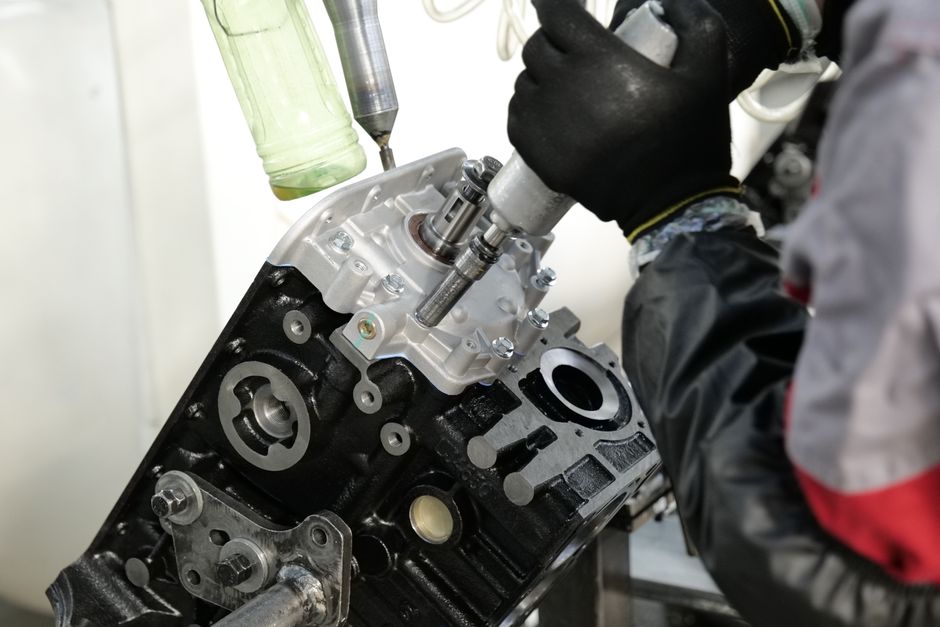
The practical scope of AI in Automotive Manufacturing extends far beyond installing computer vision at an inspection station. It includes finding weak signals in engineering changes, predicting supplier readiness, stabilizing JIT and JIS material flows, detecting process drift, and accelerating warranty investigations. These capabilities become especially important as software, electronics, and battery architectures create more variants than traditional launch controls were designed to handle. My most useful lessons came not from a polished pilot, but from watching a vehicle program struggle when data arrived too late, lacked configuration context, or never reached the person who could act on it.
The Launch That Changed My View of Manufacturing Intelligence
The program involved a high-volume passenger vehicle with a new electronic architecture and several carryover mechanical systems. On paper, the carryover content reduced launch risk. In practice, the interaction between new controllers, revised harness routing, updated calibration files, and existing assembly fixtures generated failure modes that did not fit neatly within one function. Engineering tracked ECR and ECO status, supplier quality tracked PPAP exceptions, manufacturing engineering tracked station readiness, and the plant tracked hourly losses. None of those views showed the complete vehicle configuration associated with each failure.
During an early production build, end-of-line testing began rejecting vehicles for intermittent communication faults. The first assumption was a software issue. A containment team checked controller flashes, battery condition, and diagnostic logs. Meanwhile, final assembly reported occasional connector seating difficulty at one station, but the issue was treated as a local ergonomic concern. Several shifts passed before the teams connected the rejects to a harness revision, a fixture alignment condition, and a narrow range of build sequences. The relevant evidence existed in the BOM, change records, station data, torque traces, VIN genealogy, and test logs; it simply was not assembled quickly enough.
That episode clarified the first lesson: AI in Automotive Manufacturing should be designed around decisions, not isolated datasets. A model that predicts an end-of-line reject is useful only if the prediction identifies the affected VIN population, current part revision, probable station, supplier lot, and containment action. Without this context, the plant receives another alert while engineers continue reconstructing the story manually. The strongest use cases shorten the time between a weak signal and a controlled response.
Lesson One: Configuration Context Is More Valuable Than Another Dashboard
Modern vehicle programs generate an enormous volume of records, but volume is not the same as traceability. A quality engineer investigating a fault may need to know the exact software version, option content, component serial number, supplier batch, torque result, rework event, and end-of-line test outcome for a specific VIN. If those relationships are inconsistent, an algorithm can produce a statistically credible answer that is operationally wrong. Configuration control must therefore be treated as part of the AI architecture rather than as a preliminary data-cleaning exercise.
We eventually created a configuration-aware event model that linked engineering effectivity, manufacturing BOM content, supplier lots, station histories, and test results. That foundation allowed analytical models to compare genuinely similar vehicles instead of mixing incompatible revisions. It also improved containment. When a defect appeared, the team could define the suspected population using physical genealogy and software state rather than broad production dates. This reduced unnecessary holds and protected vehicles that were not exposed.
For AI in Automotive Manufacturing, the implication is straightforward: every recommendation should carry an identity and an effective configuration. Practitioners should ask whether the model understands VIN, plant, line, station, timestamp, part revision, calibration level, and build option. They should also ask how ECR and ECO releases change the model's assumptions. A prediction that cannot survive an engineering change is unlikely to remain trustworthy through launch.
Lesson Two: Quality Signals Must Move Upstream
Our early use cases focused on detecting defects at final inspection because end-of-line data was comparatively clean. That approach improved sorting, but it did not prevent the defect. The larger benefit appeared when we moved analytical signals upstream into APQP, supplier launch readiness, and process control. Historical 8D reports, FMEA severity rankings, dimensional results, capability studies, open PPAP conditions, and prototype build issues revealed patterns that experienced engineers recognized individually but could not consistently evaluate across hundreds of parts.
AI-Powered APQP can help program teams challenge optimistic status reporting. For example, a supplier may show tooling complete while repeatedly changing process parameters, missing Run at Rate evidence, or submitting marginal capability data on a special characteristic. A risk model can combine those indicators with prior launch performance, sub-tier dependencies, capacity utilization, and logistics exposure. It should not replace the supplier quality engineer's judgment. It should direct scarce attention toward the parts and processes most likely to disrupt start of production.
The same principle applies inside the plant. Automotive Production AI can correlate welding parameters, paint-bath conditions, machining signatures, fastening traces, and inspection results to identify process drift before FPY collapses. On one line, the important signal was not a machine alarm but a gradual increase in cycle-time variation followed by small clusters of rework. Maintenance records and OEE reporting treated the events separately. Combining them revealed a deteriorating condition early enough to schedule intervention outside the critical production window.
The lesson was that quality economics improve as detection moves closer to the cause. Catching a missing clip at end-of-line avoids a customer escape; identifying the station pattern prevents dozens of repairs; recognizing the contributing supplier or engineering condition can eliminate the failure mode. AI in Automotive Manufacturing earns credibility when it reduces recurrence, not merely when it classifies defects accurately.
Lesson Three: Supplier Risk Requires Evidence Beyond Tier 1 Status
A second launch disruption came from a component whose Tier 1 supplier appeared stable. Delivery performance was strong, PPAP documentation was current, and the supplier's direct capacity plan covered the OEM schedule. The hidden constraint sat at a sub-tier processor with limited qualified capacity. When demand mix shifted toward a higher-content trim, usage increased faster than the release logic anticipated. The Tier 1 absorbed the change briefly, then missed shipments with little warning.
Supplier Quality AI is most useful when it combines quality and continuity evidence. Incoming defects, corrective-action aging, premium freight, forecast volatility, capacity assumptions, tool location, sub-tier concentration, and change-notification history should contribute to a common risk view. Text analysis can also extract unresolved concerns from audit notes, launch-readiness reviews, and 8D responses. A supplier that closes forms on time but repeatedly provides weak root-cause evidence should not receive the same confidence score as one that demonstrates durable corrective action.
This requires careful governance. Supplier risk scores can become misleading if they punish small suppliers for lower data volume or confuse a demanding OEM change schedule with poor supplier performance. Teams should expose the factors behind each score and provide a challenge process. The objective is not to automate commercial judgment; it is to detect where the evidence no longer supports the current readiness assessment.
From Prediction to Coordinated Action
We also learned that predictions alone do not change a plant outcome. A high-risk alert needs an owner, response window, escalation path, and verification step. Otherwise, it joins the queue of unresolved issues already competing for attention during launch. We redesigned several workflows so that a detected pattern generated a structured case: affected VINs, suspected contributors, relevant process records, recommended containment boundary, and the engineering or supplier-quality function responsible for review.
Agent-based workflows can help assemble this evidence across approved systems and keep actions moving. Organizations considering an AI agent development partner should begin with bounded tasks such as preparing a launch-risk brief, reconciling an ECO with plant effectivity, or collecting evidence for an 8D. Human approval remains essential for production holds, deviation authorization, supplier escalation, and safety-related decisions.
High-Tech Manufacturing AI becomes relevant here because automotive plants increasingly resemble integrated electronics, software, and precision-manufacturing environments. The useful design pattern is a governed loop: detect, explain, assign, contain, verify, and learn. Each step should preserve source evidence and an audit trail. This is especially important under IATF 16949 controls, where teams must demonstrate not only that a problem was resolved, but that the response was controlled and effectiveness was verified.
For AI in Automotive Manufacturing, adoption improved when operators, team leaders, manufacturing engineers, and quality engineers helped define the response logic. Their participation exposed practical constraints that data teams missed, including planned line stops, rework routing, model-mix effects, and inspection access. It also made recommendations easier to trust because the system reflected the plant's actual standard work.
What I Would Do Differently on the Next Program
I would start before production tooling is complete. The first models would support prototype build learning, engineering-change impact analysis, and APQP risk review rather than waiting for stable series-production data. Early deployment gives the program time to test data lineage, correct inconsistent identifiers, and establish ownership before launch pressure peaks. It also allows FMEA assumptions to be compared with real build evidence while design and process changes remain less expensive.
I would measure outcomes in automotive terms. Model accuracy matters, but program leadership needs to see reduced launch containment, faster root-cause isolation, fewer repeat defects, improved FPY, avoided premium freight, lower warranty exposure, and better schedule adherence. For maintenance use cases, the measure should include avoided downtime without excessive planned intervention. For inspection, it should include false rejects, escape rate, rework burden, and the ability to trace decisions.
Finally, I would protect the role of engineering judgment. AI in Automotive Manufacturing should make expert reasoning faster and more consistent, not hide it behind a score. The best systems show why a condition is unusual, which evidence supports the conclusion, what changed recently, and what action has worked in comparable cases. That transparency is what turns an interesting pilot into infrastructure that a vehicle program and plant can rely on.
Conclusion
The hardest launch lessons rarely come from a single failed machine or one deficient supplier. They come from delayed connections among engineering changes, material genealogy, process behavior, and field evidence. AI in Automotive Manufacturing can close those gaps when it is built on configuration integrity, upstream prevention, explainable supplier risk, and controlled action workflows. For OEMs and Tier 1 suppliers developing that foundation, High-Tech Manufacturing AI offers a useful frame for connecting software, electronics, quality, and production intelligence without losing the discipline required on an automotive launch.
Comments
Post a Comment