Solving Production Challenges with Intelligent Automation in Production
Automotive manufacturers face an unprecedented convergence of operational pressures: labor shortages threatening production capacity, supply chain disruptions creating material volatility, regulatory demands tightening emissions and safety standards, and competitive forces demanding faster innovation cycles. Traditional approaches to these challenges—adding more workers, carrying larger inventory buffers, or extending lead times—no longer provide viable solutions. The complexity of modern automotive manufacturing requires intelligent systems that can navigate uncertainty, optimize across competing objectives, and adapt to rapidly changing conditions.
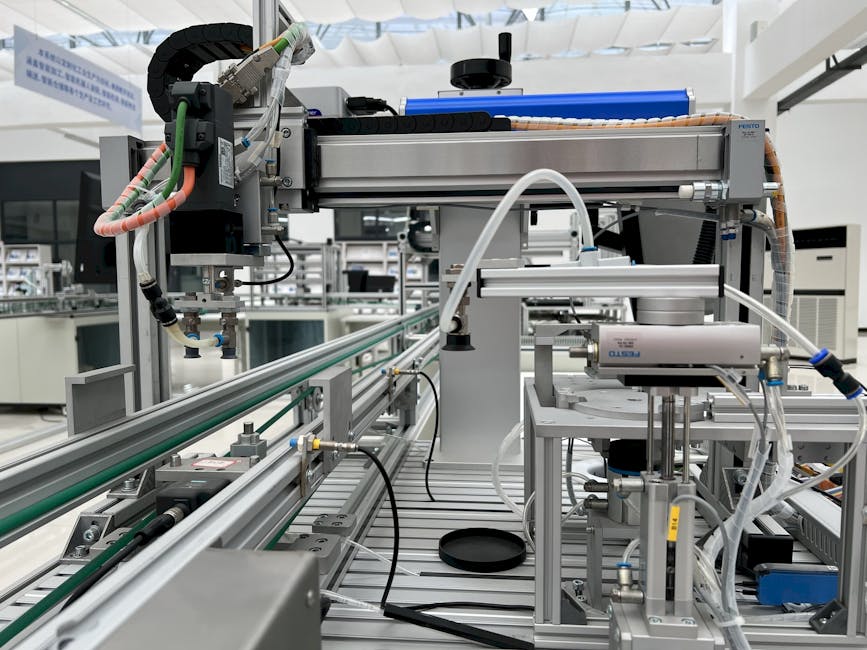
The emergence of Intelligent Automation in Production offers multiple pathways for addressing these challenges. Rather than a single monolithic solution, automotive manufacturers are deploying targeted automation strategies tailored to their specific pain points and operational contexts. Understanding the range of approaches available—and the problems each addresses most effectively—enables manufacturers to build roadmaps that deliver measurable value while managing implementation complexity and capital constraints.
Problem: Labor Shortages and Skill Gaps in Complex Manufacturing Operations
The automotive industry faces a critical workforce challenge: experienced technicians and engineers are retiring faster than new talent can be recruited and trained. The specialized knowledge required to maintain modern production equipment, troubleshoot complex quality issues, and optimize multi-stage manufacturing processes cannot be replaced overnight. This skills gap threatens production capacity and quality performance across the industry.
Solution Approach: Knowledge Capture and Augmented Intelligence Systems
Intelligent Automation in Production addresses workforce challenges through systems that capture expert knowledge and make it accessible to less experienced operators. Computer vision systems equipped with object recognition and pattern matching can guide technicians through complex maintenance procedures, highlighting specific components and verifying correct assembly sequences. These systems don't replace human judgment; they amplify the capabilities of available workers by providing real-time access to expert-level knowledge.
Digital workflow systems with embedded decision logic codify best practices developed over decades of continuous improvement. When a quality alert triggers, the system doesn't just notify an operator; it provides diagnostic guidance based on similar historical incidents, recommended corrective actions, and verification steps to confirm the fix. This institutional knowledge transfer happens in real time at the point of need, reducing dependency on scarce expert resources.
Natural language interfaces powered by large language models enable operators to query production systems conversationally. Instead of navigating complex HMI screens or searching through documentation, a technician can ask "Why is line 3 running 15% below target?" and receive a synthesized analysis drawing from equipment data, quality metrics, and recent maintenance history. This democratizes access to Manufacturing Intelligence Systems across the workforce regardless of technical expertise.
Problem: Supply Chain Disruption and Material Availability Uncertainty
The automotive supply chain's globalized, multi-tier structure creates vulnerability to disruptions ranging from natural disasters to geopolitical events to transportation bottlenecks. Just-in-time production that once provided competitive advantage now becomes a liability when material flows become unpredictable. Manufacturers need visibility and responsiveness that traditional supply chain planning cannot provide.
Solution Approach: Predictive Supply Chain Orchestration
Advanced analytics platforms that integrate supplier data, logistics tracking, and production requirements enable predictive supply chain management. Machine learning models trained on historical disruption patterns learn to recognize early warning signals: a supplier's on-time delivery performance declining, port congestion increasing in key shipping lanes, or weather patterns suggesting transportation delays. These systems provide weeks of advance notice rather than discovering shortages when materials fail to arrive.
Multi-echelon inventory optimization balances the cost of carrying buffer stock against the risk of line stoppages. Rather than applying uniform safety stock rules, intelligent systems calculate optimal inventory levels for each component based on its supply risk, lead time variability, and the production impact of shortages. Critical path components that would halt production get higher inventory targets; commodity items with multiple sourcing options and short lead times operate with minimal buffer.
Supplier collaboration platforms extend visibility beyond tier-one suppliers into tier-two and tier-three sources. When a semiconductor shortage affects multiple automotive electronics suppliers, the system maps dependencies across the supply network to identify which production programs face the highest risk. This network-level visibility enables proactive mitigation strategies: qualifying alternate suppliers, adjusting production sequences to consume at-risk materials first, or communicating delivery delays to dealers before they become customer-facing issues.
Problem: Quality Variability and Defect Prevention in Multi-Stage Production
Modern vehicles incorporate thousands of components assembled through hundreds of process steps spanning multiple facilities. Quality problems can originate at any stage and manifest several steps downstream, making root cause analysis challenging. Traditional sample-based inspection catches defects after they occur; what's needed is prevention before defective units are produced.
Solution Approach: Closed-Loop Quality Intelligence with Real-Time Process Control
Inline inspection systems using computer vision and spectroscopy examine every component rather than statistical samples, generating complete quality data across the entire production volume. Convolutional neural networks trained on millions of images detect defects with accuracy exceeding human inspectors while operating at line speed. More importantly, these systems classify defect types and correlate them with upstream process parameters to identify root causes.
When organizations invest in tailored AI solutions, they can address quality challenges unique to their processes and products. Generic vision systems might miss defect types specific to particular materials or manufacturing techniques; custom-trained models learn the nuances of each production context. Ford and GM have both deployed proprietary quality AI systems trained on their specific processes, achieving defect detection rates traditional methods cannot match.
Real-time statistical process control extends beyond monitoring to automatic adjustment. When process parameters drift toward control limits, the system automatically adjusts machine settings to bring the process back to center. For example, as tooling in a stamping press wears gradually over thousands of cycles, the press force and dwell time are incrementally adjusted to maintain dimensional specifications. This continuous micro-adjustment maintains quality without the step-function changes that occur when tooling is replaced on a fixed schedule.
FMEA processes become dynamic rather than static. Instead of periodic engineering reviews of failure modes, intelligent systems continuously analyze actual production data to validate predicted failure modes and identify emerging risks not captured in original analysis. This creates a living quality system that evolves with the production process rather than becoming outdated documentation.
Problem: Equipment Downtime and Maintenance Cost Optimization
Unplanned equipment failures halt production, creating cascading effects throughout the manufacturing schedule. Automotive plants operate hundreds of critical assets—stamping presses, welding robots, paint booths, conveyor systems—where a failure in any single component can stop the entire line. Maintenance costs represent a significant operational expense, but inadequate maintenance creates even larger costs through downtime and quality issues.
Solution Approach: Predictive Maintenance with Prescriptive Action Planning
Sensor networks monitoring vibration, temperature, acoustic signatures, and performance metrics provide continuous equipment health data. Machine learning models trained on historical failure data learn the patterns that precede different failure modes. A bearing degradation has a different vibration signature than belt misalignment or motor controller issues; the system distinguishes between these patterns and predicts which specific component will fail and when.
The intelligence extends beyond prediction to prescription. When the system forecasts a servo motor failure in 10 days, it automatically generates a maintenance work order with the specific spare parts required, schedules the intervention during the next planned downtime window, and assigns technicians with the appropriate skills. If no downtime window exists before the predicted failure, the system collaborates with production scheduling to identify the least disruptive time for intervention, balancing maintenance needs against production commitments.
OEE Optimization benefits directly from intelligent maintenance. By preventing unplanned downtime, predictive approaches eliminate the largest source of availability loss. By optimizing maintenance timing, they minimize planned downtime. And by identifying root causes of chronic performance losses—small speed reductions or micro-stops that don't trigger alarms but erode productivity—they enable targeted improvements that compound over time.
Problem: Production Inflexibility and Slow Response to Demand Changes
Consumer preferences and market conditions change rapidly, but automotive production systems traditionally require weeks or months to adjust. Product mix changes, volume ramp-ups, or new model introductions demand equipment reconfiguration, tooling changes, and process validation. The ability to respond quickly to market signals provides competitive advantage, but legacy production systems resist rapid change.
Solution Approach: Adaptive Production Systems with Digital Twin Optimization
Digital twin technology creates virtual replicas of production systems that enable experimentation without disrupting actual production. When market demand shifts toward SUV models and away from sedans, engineers can simulate production line reconfigurations in the digital twin to identify the fastest path to the new product mix. The simulation incorporates equipment capabilities, changeover times, operator skills, and material availability to generate feasible implementation plans.
Lean Production Automation principles are enhanced by intelligent systems that automatically adjust production parameters based on changing conditions. When demand spikes for a particular vehicle configuration, the system recalculates optimal batch sizes, sequences production to minimize changeovers, and coordinates material flow to support the new schedule. This dynamic optimization happens continuously rather than through periodic replanning cycles.
Modular, reconfigurable work cells replace fixed production lines in forward-looking facilities. These cells use collaborative robots that can be reprogrammed for different tasks, fixtures that adjust automatically for different part geometries, and vision systems that guide assembly regardless of product variant. When Honda introduces a new model variant, the intelligent work cell learns the new assembly sequence through demonstration rather than requiring extensive reprogramming.
Problem: Energy Consumption and Sustainability Compliance
Regulatory pressure to reduce carbon emissions affects both vehicle products and manufacturing operations. Energy represents a significant production cost, and sustainability reporting demands detailed tracking of energy consumption and emissions across the value chain. Traditional approaches to energy management lack the granularity and responsiveness needed to achieve aggressive reduction targets.
Solution Approach: Intelligent Energy Management with Load Optimization
Granular energy monitoring at the equipment level reveals consumption patterns invisible to facility-level metering. Intelligent Automation in Production platforms correlate energy use with production activities to calculate energy intensity per unit produced. This reveals which processes consume disproportionate energy relative to their value contribution, targeting improvement efforts where they deliver the greatest impact.
Demand response systems automatically adjust production schedules to take advantage of off-peak electricity rates and grid conditions favoring renewable energy. When wind generation creates abundant low-cost electricity overnight, energy-intensive processes like heat treating or paint curing can be scheduled preferentially during those hours. The system optimizes across energy cost, production deadlines, and equipment availability to minimize total operational cost.
Predictive HVAC and compressed air management eliminates energy waste in facility systems. Machine learning models learn the thermal dynamics of specific production areas and pre-condition spaces based on upcoming production schedules rather than maintaining constant conditions. Compressed air systems—notorious energy consumers in manufacturing—operate on-demand based on actual usage patterns rather than maintaining constant pressure throughout the facility.
Integration and Implementation Pathways
Deploying Intelligent Automation in Production across automotive manufacturing operations requires careful sequencing. Most successful implementations follow a crawl-walk-run progression: starting with pilot projects in constrained areas, expanding to full production lines after validation, and eventually scaling across multiple facilities. Toyota's approach to new technology deployment exemplifies this methodology—extensive testing in controlled environments before enterprise-wide rollout ensures reliability and builds organizational capability.
Data infrastructure provides the foundation for all intelligent automation initiatives. Organizations must first establish reliable data collection, storage, and access before deploying advanced analytics. This often means retrofitting legacy equipment with sensors and connectivity, implementing data lakes or historian systems, and creating APIs that make production data accessible to analytical applications. Without this foundation, sophisticated algorithms have nothing to work with.
Change management cannot be underestimated. Production workers and maintenance technicians need training not just in system operation but in collaborating with intelligent automation. The most effective deployments position automation as augmenting human capabilities rather than replacing workers. When operators understand that the system helps them perform better rather than threatens their jobs, adoption barriers decrease substantially.
Conclusion
The challenges facing automotive manufacturing demand solutions that operate at the speed and complexity of modern production environments. Intelligent Automation in Production provides not a single answer but a toolkit of approaches—each addressing specific problems while contributing to overall operational excellence. Whether tackling workforce constraints through augmented intelligence, managing supply chain uncertainty through predictive orchestration, or optimizing quality through closed-loop control, these technologies share common characteristics: they learn from data, adapt to changing conditions, and enhance human decision-making rather than replacing it. Forward-looking manufacturers are also exploring how Generative AI Solutions can further transform production environments through automated process documentation, conversational interfaces to complex systems, and even generative design approaches that optimize manufacturability during product development. The path forward requires strategic vision, disciplined implementation, and commitment to continuous learning—but the operational advantages justify the investment for manufacturers determined to remain competitive in an increasingly demanding market.
Comments
Post a Comment