Production Line Automation in Discrete Manufacturing: A Deep-Dive Analysis
Discrete manufacturing—the production of distinct items like automobiles, electronics, appliances, and industrial equipment—faces unique automation challenges that distinguish it from process industries. Unlike continuous flow operations where automation primarily controls parameters like temperature, pressure, and flow rates, discrete manufacturing requires coordination of hundreds or thousands of individual operations across complex assembly sequences. Each product configuration may follow different routing through production equipment, require unique quality verification steps, and demand specific material handling protocols. These complexities explain why discrete manufacturing has historically lagged process industries in automation adoption, with recent surveys indicating that only 34% of discrete manufacturers operate fully automated production lines compared to 61% in process industries. Yet the same complexity that complicates automation also creates the largest opportunities for competitive advantage when automation succeeds.
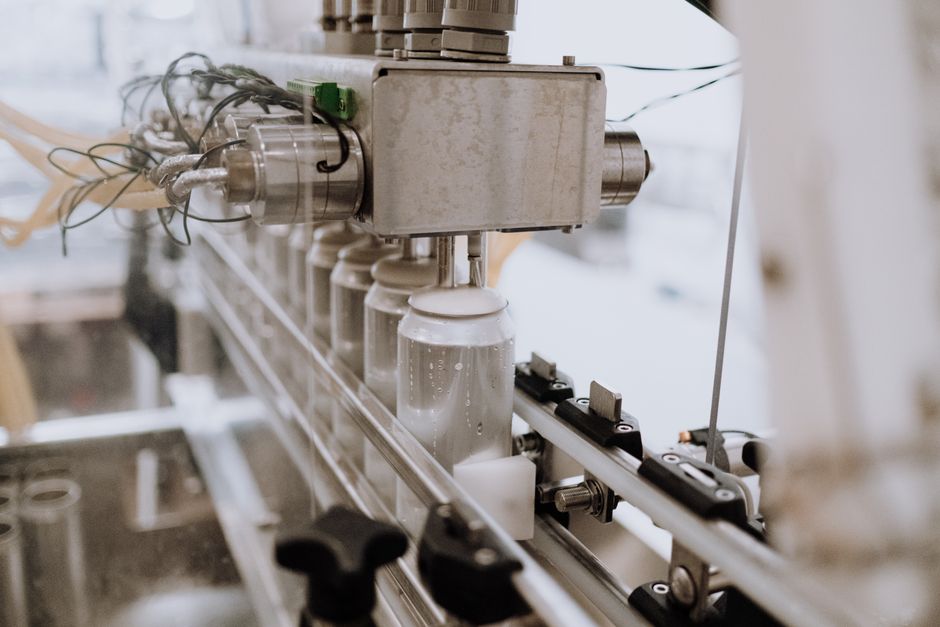
The business case for Production Line Automation in discrete manufacturing extends far beyond labor cost reduction. Modern discrete manufacturers compete on their ability to deliver customized products at commodity prices, respond to market shifts within weeks rather than quarters, and guarantee quality levels that would have been considered impossible a decade ago. These competitive requirements are fundamentally incompatible with manual or semi-automated production systems. Companies like Fanuc and Rockwell Automation have demonstrated that comprehensive automation enables discrete manufacturers to operate profitable production runs as small as single units—economic batch sizes that transform competitive dynamics by eliminating the traditional trade-off between customization and cost. This capability opens entirely new market segments while simultaneously defending existing business against low-cost competitors who lack comparable operational flexibility.
Assembly Line Automation: Coordinating Complexity at Scale
Assembly operations represent the most visible and often most challenging aspect of Production Line Automation in discrete manufacturing. A modern automotive assembly line might include 400-600 individual operations, each requiring precise coordination with upstream and downstream processes. Component delivery must synchronize with assembly sequence to ensure parts arrive at the correct workstation within 30-60 second windows. Quality verification at each stage must complete within cycle time constraints while capturing sufficient data to enable root cause analysis when defects occur. Equipment must automatically adjust for product variations as different configurations flow through the same line without manual changeover operations that would destroy productivity.
Successful assembly automation relies on hierarchical control architectures that decompose overall production into manageable subsystems. Individual workstations operate autonomously, executing their programmed operations and performing local quality verification. Zone controllers coordinate 5-10 workstations, managing material flow and resolving local issues without escalating to central systems. Line controllers manage entire production lines, optimizing overall throughput while ensuring quality requirements and regulatory compliance. Manufacturing execution systems orchestrate multiple production lines, allocating orders based on capability, capacity, and delivery requirements. This layered architecture enables the system to respond to local disturbances in milliseconds while maintaining strategic alignment with enterprise objectives that may shift over days or weeks.
Smart Factory Integration for Material Flow Optimization
Material handling represents a critical but often underestimated component of assembly automation. Traditional approaches treated material delivery as a separate function from assembly operations, creating chronic synchronization problems and inventory buildups at workstation buffers. Modern Smart Factory Integration treats material flow as an integral part of assembly automation, using IIoT-enabled tuggers, autonomous mobile robots, and intelligent conveyor systems that dynamically route materials based on real-time production status. These systems reduce work-in-process inventory by 40-60% while simultaneously improving material availability and reducing line stoppages from parts shortages.
The economic impact of optimized material flow extends beyond direct inventory carrying cost reductions. Lower work-in-process inventory shortens production lead times, enabling faster response to customer orders and reducing the bullwhip effect that amplifies demand variability upstream in the supply chain. Reduced inventory also limits exposure when engineering changes obsolete existing components, lowering the financial impact of product updates. One aerospace equipment manufacturer calculated that material flow optimization delivered $4.8 million in annual benefits through combined reductions in inventory carrying costs, obsolescence charges, and quality losses from using aging components—returns that far exceeded the direct labor savings from assembly automation itself.
Robotic Process Automation in Discrete Manufacturing Operations
While industrial robots handle physical assembly tasks, Robotic Process Automation addresses the digital workflows that determine what gets produced, when, and with which specifications. Discrete manufacturers typically process dozens to hundreds of production orders daily, each potentially requiring unique routing, special process parameters, custom quality inspection protocols, and specific packaging requirements. Traditional systems required production planners to manually configure these parameters, consuming substantial time and creating frequent errors that triggered quality issues or customer delivery failures.
Modern Robotic Process Automation systems eliminate manual configuration by automatically translating customer orders into detailed production instructions. The automation reads order specifications from enterprise resource planning systems, validates feasibility against current capacity and material availability, generates optimized production schedules that sequence orders to minimize changeover time, configures manufacturing execution systems with product-specific parameters, and creates required quality documentation—all without human intervention. This end-to-end automation reduces order-to-production cycle times from days to hours while eliminating configuration errors that plagued manual processes.
The business value extends beyond efficiency gains. Automated order processing enables discrete manufacturers to profitably accept small-quantity custom orders that manual systems couldn't economically process. One industrial control manufacturer reduced their minimum profitable order quantity from 50 units to just 5 units after implementing comprehensive process automation, opening new market opportunities with customers requiring small quantities of specialized configurations. Their revenue from custom orders grew from 12% to 34% of total sales over three years—growth that would have been operationally impossible without automation supporting the required order processing velocity and accuracy.
Advanced Quality Control in Complex Assembly Environments
Quality control in discrete manufacturing must verify not just individual components but also assembly relationships—torque values on threaded fasteners, alignment tolerances between mating parts, electrical continuity across connectors, and hundreds of other parameters that determine product functionality and reliability. Traditional sampling-based approaches provided limited visibility, typically inspecting 2-10% of production and relying on statistical inference to assess overall quality. This approach proved adequate when processes were stable and specification limits generous, but modern requirements for higher reliability and tighter tolerances demand more comprehensive verification.
Production Line Automation enables 100% inspection of critical parameters without impacting production throughput. Vision systems verify component presence, orientation, and installation quality at every assembly station. Torque monitoring systems record actual values for every fastener rather than sampling. Electrical test systems verify connectivity and performance of embedded electronics. This comprehensive data collection creates complete digital quality records for every unit produced, enabling detailed traceability that satisfies aerospace, medical device, and automotive regulatory requirements while simultaneously providing the data foundation for continuous improvement initiatives.
The implementation of comprehensive quality control requires careful integration with intelligent automation platforms that can process quality data in real-time and trigger appropriate responses. When measurements drift toward specification limits, automated systems can alert operators, adjust process parameters, or even halt production depending on the severity and configured response protocols. This immediate feedback prevents the accumulation of defective product that characterized traditional batch inspection approaches. One medical device manufacturer reduced their scrap and rework costs by 76% after implementing real-time quality control with automated process adjustment, despite simultaneously tightening their specification limits by 40% to meet new regulatory requirements.
Predictive Maintenance Strategies for High-Mix Production
Predictive Maintenance in discrete manufacturing faces unique challenges compared to continuous process operations. While process plants typically run the same equipment continuously under stable conditions, discrete manufacturers often operate equipment through widely varying duty cycles as different products with different processing requirements flow through production lines. A stamping press might operate at 40 strokes per minute for one product and 25 strokes per minute for another, with forces varying from 200 tons to 800 tons depending on part geometry. This variability complicates the detection of degrading component conditions that predictive maintenance systems depend upon.
Advanced predictive systems address this challenge by normalizing sensor data against operational context. Rather than simply monitoring whether vibration amplitude exceeds threshold values, they analyze vibration signatures relative to current operational parameters—product being manufactured, cycle speed, tooling configuration, and ambient conditions. Machine learning models trained on months or years of operational data can distinguish between normal variations driven by product mix and abnormal patterns indicating component degradation. This context-aware analysis reduces false positive maintenance alerts by 70-85% compared to simple threshold-based approaches while simultaneously detecting genuine problems earlier in their development.
The economic value of effective predictive maintenance grows with equipment criticality and production complexity. In high-mix discrete manufacturing, unplanned equipment failures often require specialized technical support to diagnose and repair, extending downtime from hours to days. The ability to predict failures 1-4 weeks in advance enables scheduling maintenance during planned production gaps, coordinating parts delivery, and arranging specialized technical resources—transforming disruptive emergency repairs into routine planned maintenance. One electronics manufacturer documented that their predictive maintenance program reduced average repair time from 18 hours to 4.5 hours by enabling better preparation, while simultaneously reducing failure frequency by 42% through early intervention on degrading components.
Production Scheduling Optimization Through Real-Time Data
Production scheduling in discrete manufacturing traditionally relied on weekly or daily planning cycles that generated fixed schedules based on forecast demand and assumed capacity. This approach worked adequately when production rates were predictable and customer demand stable, but modern requirements for shorter lead times and higher product variety create chronic conflicts between fixed schedules and dynamic reality. Equipment failures, quality issues, material shortages, and rush orders constantly disrupted planned sequences, forcing reactive replanning that rarely achieved optimal results.
Production Line Automation with real-time data integration enables dynamic scheduling that continuously optimizes production sequences based on current conditions. Manufacturing execution systems receive live updates on equipment status, quality performance, inventory levels, and incoming orders. Advanced scheduling algorithms evaluate thousands of potential production sequences within seconds, selecting options that minimize changeover time, meet customer delivery commitments, and balance equipment utilization across production resources. As conditions change—equipment coming back online from maintenance, quality issues requiring rework, rush orders arriving—the system automatically adjusts schedules to maintain optimal performance.
The business impact of dynamic scheduling extends across multiple operational dimensions. Manufacturers report 15-30% improvements in on-time delivery performance as systems optimize sequences to meet customer commitments even when disruptions occur. Equipment utilization increases 10-20% through better sequencing that reduces changeover frequency and duration. Inventory levels decline 25-40% as just-in-time material delivery synchronizes with actual production schedules rather than forecasts. These improvements compound to deliver substantial competitive advantage in markets where delivery reliability and responsiveness determine customer loyalty.
Digital Twin Modeling for Process Optimization
Digital twin technology—virtual replicas of physical production systems that simulate operational behavior—enables discrete manufacturers to optimize processes without disrupting actual production. Engineers can evaluate alternative process parameters, test new product designs for manufacturability, assess the impact of equipment modifications, and validate maintenance strategies entirely within simulation environments. This capability accelerates process improvement cycles from months to weeks while eliminating the production disruption and quality risks associated with trial-and-error optimization on live production lines.
The most sophisticated digital twin implementations continuously calibrate themselves against actual production data, maintaining accuracy as equipment ages and process characteristics shift. Sensors throughout production systems feed real-time data to digital twins, which adjust their models to reflect current conditions. This continuous calibration ensures that simulation results remain valid even as physical systems drift from original specifications. The maintained accuracy enables confident decision-making based on simulation results, reducing the need for extensive physical validation testing that traditionally gated process changes.
One automotive components manufacturer uses digital twin modeling to optimize production sequences for new product introductions. Their simulation environment models material flow, equipment utilization, quality performance, and throughput for new products before any physical production occurs. This virtual commissioning identifies potential bottlenecks, quality risks, and equipment conflicts that can be resolved through design modifications or process adjustments before production launch. The approach reduced their new product ramp time from 12-16 weeks to 4-6 weeks while simultaneously improving first-time quality and reducing launch costs by 40-55%.
Workforce Transformation and Skills Development
Successful Production Line Automation requires fundamental changes in workforce skills and organizational structure. Traditional discrete manufacturing relied heavily on operator expertise to manage process variability, diagnose quality issues, and optimize production sequences. Automation shifts these responsibilities from individual operators to integrated systems, fundamentally changing required workforce capabilities. Organizations that fail to anticipate this transformation encounter chronic automation underperformance as staff lack the skills to operate, maintain, and optimize sophisticated automated systems.
Leading manufacturers address this challenge through comprehensive upskilling programs that develop new technical capabilities across their workforce. Operators receive training in system monitoring, exception handling, and basic troubleshooting—skills that enable them to supervise automated operations effectively. Maintenance technicians develop capabilities in programmable logic controller programming, sensor calibration, and network diagnostics required to support complex automation infrastructure. Engineers gain expertise in machine learning, digital twin modeling, and advanced analytics that enable continuous optimization of automated systems. This multi-level skill development ensures that organizations can fully leverage automation capabilities rather than operating sophisticated systems at fraction of their potential.
Conclusion: Strategic Imperatives for Discrete Manufacturers
The evidence from discrete manufacturing implementations demonstrates that Production Line Automation delivers transformative competitive advantage when implemented comprehensively. Organizations achieve simultaneous improvements in cost, quality, flexibility, and delivery performance—capabilities that manual operations cannot match regardless of skill levels or effort. The performance gap continues widening as machine learning systems refine their optimization and organizations develop deeper expertise in leveraging automation capabilities. For discrete manufacturers competing in markets characterized by shortening product lifecycles, increasing customization demands, and intensifying cost pressure, automation transitions from optional improvement to strategic imperative.
Success requires more than technology acquisition, however. The discrete manufacturers achieving exceptional results treat automation as enterprise transformation initiatives that redesign operations, develop new organizational capabilities, and fundamentally alter competitive positioning. They invest in comprehensive workforce development that builds required technical skills across all levels. They redesign processes to eliminate the complexity that complicates automation rather than simply automating existing inefficient workflows. Most critically, they partner with experienced Automation Integration Services providers who bring proven methodologies, deep technical expertise, and experience navigating the organizational and technical challenges that inevitably emerge during major automation initiatives. This holistic approach—combining advanced technology with organizational transformation and expert implementation support—enables discrete manufacturers to execute successful automation programs that deliver sustained competitive advantage and position them for leadership in increasingly automated manufacturing landscapes.
Comments
Post a Comment