Intelligent Automation in Investment Banking: Lessons from the Trading Floor
Three years ago, I watched our M&A team miss a critical window on a $2.3 billion senior debt offering because our due diligence workflow relied on seventeen separate Excel files, six email chains, and manual data entry across three legacy systems. The deal closed eventually, but the reputational damage and the hours burned on reconciliation taught us something vital: in investment banking, speed and accuracy are not opposing forces when you have the right automation infrastructure. That near-miss became the catalyst for our firm's transformation journey into intelligent process automation.
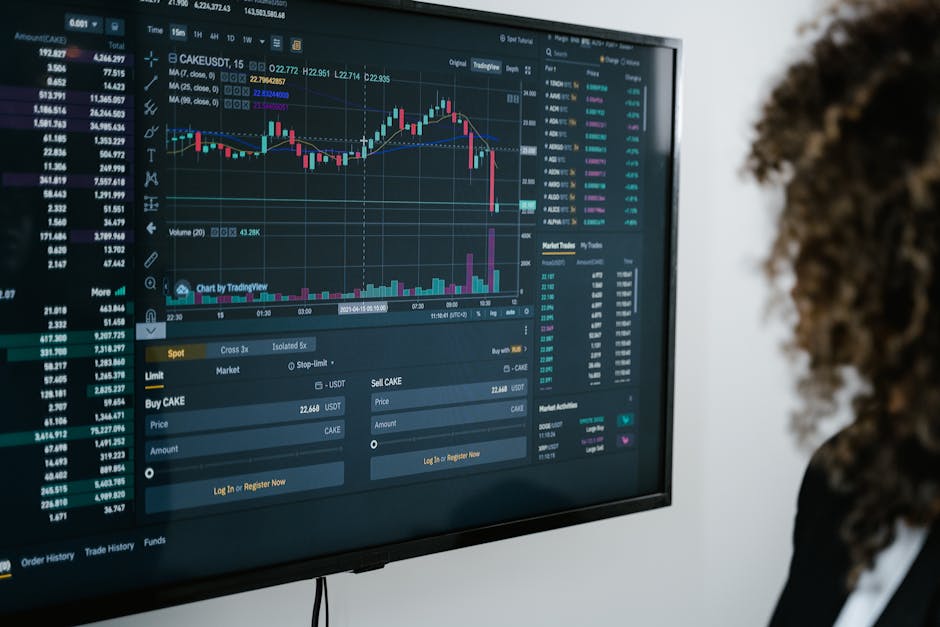
What we discovered over the following thirty-six months fundamentally reshaped how we approach trade execution, risk management, and client onboarding. Intelligent Automation in Investment Banking is not about replacing bankers with algorithms; it is about eliminating the friction that prevents skilled professionals from doing what they do best. The lessons we learned came at a cost—in time, capital, and some painful mistakes—but they offer a roadmap for firms still navigating this transition.
The Wake-Up Call: When Manual Processes Nearly Cost Us a Deal
Our advisory desk had been managing M&A transactions the same way for over a decade. Partners relied on analysts to aggregate financial statements, build comparables, and run sensitivity analyses. The work was meticulous, but it was also slow. During that $2.3 billion deal, we were competing against two bulge-bracket firms and a boutique advisory shop known for speed. Our analysis was thorough, but by the time we delivered our book building recommendations, the client had already received preliminary terms from a competitor.
The post-mortem revealed something uncomfortable: we had spent sixty percent of our billable hours on data gathering and validation, not on strategic advisory work. Our analysts were effectively acting as data processors. One senior associate calculated that across our M&A practice, we were burning roughly 14,000 hours per quarter on tasks that added no analytical value. That translated to millions in opportunity cost and a competitive disadvantage in time-sensitive mandates.
We realized that incremental improvements would not solve the problem. We needed to rethink our entire workflow architecture, starting with the processes that consumed the most time and introduced the most errors. That meant confronting something many traditional firms resist: admitting that parts of our operational model were fundamentally broken.
Lesson One: Start with Trade Settlement, Not Everything at Once
Our first instinct was to automate everything simultaneously—due diligence, client reporting, regulatory filings, trade execution, and performance attribution analysis. Our technology committee drafted a sweeping transformation plan that would have touched every desk and every workflow. Fortunately, our Chief Operating Officer, who had led operations at a top-tier wealth management platform, pushed back. She argued that we needed a beachhead, a single high-impact process where we could prove value and learn without destabilizing the entire operation.
We chose trade settlement. It was painful, repetitive, and error-prone, but it was also self-contained. Our equity trading desk was processing approximately 8,500 trades per month, and settlement exceptions were costing us roughly $340,000 annually in breaks, reprocessing, and reconciliation labor. We implemented an intelligent workflow that automated trade matching, exception flagging, and reconciliation against counterparty records. The system used machine learning to identify patterns in settlement failures and route exceptions to the appropriate operations team members based on trade characteristics and historical resolution patterns.
The results were immediate. Settlement exceptions dropped by seventy-two percent in the first quarter. Processing time per trade decreased from an average of eight minutes to ninety seconds. But the real lesson was not in the metrics; it was in what we learned about change management, data quality, and system integration. Those lessons became the foundation for every subsequent automation initiative we launched.
Lesson Two: Risk Management Automation Requires Cultural Buy-In
Emboldened by our settlement success, we turned to risk management. Our risk team was running daily VaR calculations, stress tests, and exposure analyses using a combination of proprietary models and vendor platforms. The calculations were technically sound, but they were batch-oriented, backward-looking, and difficult to contextualize for trading desks. We wanted real-time risk analytics that could inform intraday trading decisions, not just end-of-day compliance reports.
We partnered with a specialized provider focused on AI solution development to build a platform that ingested trade data, market feeds, and position updates in real time, then calculated exposure metrics and scenario analyses on a continuous basis. Technically, the platform performed exactly as designed. Culturally, it nearly failed.
Our traders did not trust the new system. They had spent years developing intuition about their books, and they viewed the automated risk alerts as intrusive and overly cautious. One senior trader on the derivatives desk told me bluntly: "I have been managing credit default swaps for fifteen years. I do not need a machine telling me when I am overexposed." The risk team, meanwhile, felt the automation undermined their expertise and reduced their role to system babysitters.
We learned that implementing Risk Management Automation requires more than technical integration; it requires redefining roles and demonstrating value in terms that resonate with each stakeholder group. We spent three months running the automated system in parallel with the manual process, highlighting instances where the automation caught risks that manual reviews missed. We also involved senior traders in tuning the alert thresholds and scenario parameters, giving them ownership over the system rather than positioning it as an external constraint. Gradually, resistance shifted to adoption, then to advocacy. Today, our trading desks rely on those real-time risk dashboards as much as they rely on Bloomberg terminals.
Lesson Three: Data Quality Makes or Breaks Your Automation
Our third major initiative targeted client onboarding for wealth management. The process was notoriously slow, often taking three to four weeks from initial application to account activation. Clients had to submit documentation multiple times, and our compliance team manually reviewed every field to ensure adherence to KYC and fiduciary duty standards. We believed that Intelligent Automation in Investment Banking could compress that timeline to seventy-two hours.
We designed an intelligent intake system that used natural language processing to extract data from client documents, cross-referenced information against internal databases and third-party verification services, and flagged high-risk profiles for human review. In theory, the system should have reduced manual touch points by eighty percent. In practice, it initially made the process worse.
The problem was data quality. Our client records were stored across four different systems, each with its own data model and validation rules. Account numbers followed inconsistent formats. Address fields contained free-text entries with typos and abbreviations. Even basic fields like client names had variations: "John A. Smith," "Smith, John," "J.A. Smith." The automation system could not reconcile these inconsistencies, so it flagged nearly every application for manual review, creating a bottleneck worse than the original manual process.
We spent six months on data remediation before we could fully deploy the onboarding automation. We standardized data models, implemented master data management protocols, and built validation rules into every upstream system. It was unglamorous work, but it was essential. Once the data foundation was solid, the onboarding automation delivered on its promise: average onboarding time dropped to four days, client satisfaction scores increased, and our compliance team could focus on genuinely complex cases rather than routine data validation.
The Results: What We Learned About Scaling in Capital Markets
By the end of year two, we had automated portions of trade settlement, risk management, client onboarding, regulatory reporting, and performance attribution analysis. Our operating costs had decreased by nineteen percent, while our capacity to take on new mandates had increased by thirty-one percent. We were processing more trades, managing more client accounts, and closing more advisory deals with the same headcount we had three years earlier. But the quantitative results tell only part of the story.
The qualitative transformation was even more significant. Our junior analysts were no longer spending sixty-hour weeks copying data between systems. They were building financial models, conducting industry research, and developing client-facing presentations—the work they were hired to do. Our senior bankers had real-time visibility into deal pipelines, risk exposures, and client portfolios, enabling faster and more informed decision-making. Our compliance team could demonstrate to regulators that our controls were not just documented but actively enforced through automated workflows.
We also learned to integrate Trade Execution Automation and Capital Markets AI in ways that reinforced each other. Our algorithmic trading platform used machine learning to optimize execution strategies based on market conditions, historical patterns, and liquidity profiles. Those execution insights fed back into our risk models, creating a continuous feedback loop that improved both trading performance and risk oversight. This kind of systemic integration would have been impossible in a manual environment.
Conclusion
Looking back at that near-miss on the senior debt offering, I see it as the inflection point that forced us to confront reality. Investment banking has always been a high-stakes, high-velocity business, but the competitive bar keeps rising. Firms that cling to legacy processes out of tradition or risk aversion will find themselves outmaneuvered by competitors who have embraced intelligent automation. The lessons we learned—start small, secure cultural buy-in, prioritize data quality, and integrate systems holistically—are not unique to our firm, but they are often learned the hard way. For firms embarking on this journey, partnering with the right Financial Automation Solutions providers can accelerate the learning curve and help avoid the costly mistakes we made. The future of investment banking will be defined not by who has the most people, but by who can deploy technology to amplify human expertise at scale.
Comments
Post a Comment