Inside Intelligent Production Lines: How Automation Actually Works
Modern manufacturing facilities operate with a level of sophistication that would have seemed impossible just a decade ago. At the heart of this transformation lies a network of interconnected systems that continuously monitor, analyze, and optimize every aspect of production. From the moment raw materials enter the facility to the final quality inspection, intelligent systems coordinate thousands of decisions per second, adjusting machine parameters, routing components, and predicting potential issues before they impact production throughput. Understanding how these systems work requires looking beyond the visible machinery to examine the layers of sensors, algorithms, and communication protocols that make truly autonomous manufacturing possible.
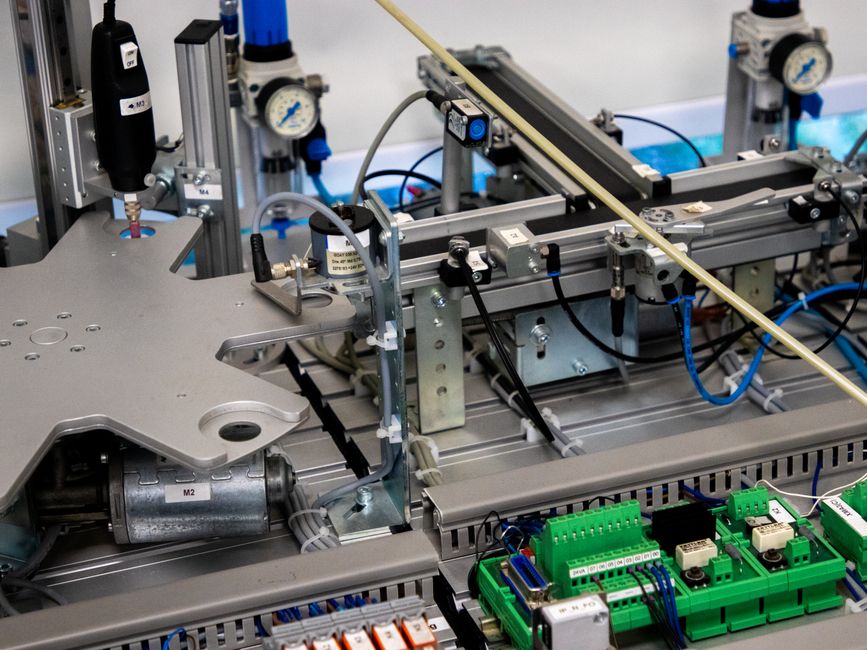
The foundation of Intelligent Production Lines rests on three interconnected pillars: real-time data acquisition, advanced analytics, and automated response systems. Unlike traditional production environments where adjustments required human intervention, these intelligent systems operate in continuous feedback loops that span the entire manufacturing operation. Companies like Siemens and Rockwell Automation have pioneered approaches that integrate OEE monitoring with machine learning algorithms, creating production environments that learn from every cycle and continuously refine their performance. This integration represents a fundamental shift from reactive to proactive manufacturing, where potential issues are addressed before they escalate into costly downtime.
The Sensor Network: Foundation of Real-Time Intelligence
Every intelligent production line begins with comprehensive data acquisition. Smart sensors embedded throughout the facility capture hundreds of parameters simultaneously: vibration patterns in rotating equipment, temperature fluctuations in thermal processes, pressure variations in hydraulic systems, and positional accuracy in robotic arms. These sensors operate at millisecond intervals, generating massive data streams that flow into centralized processing systems. The sophistication of modern IIoT architectures allows these sensors to perform edge computing, preprocessing data locally before transmission to reduce network bandwidth requirements and enable faster response times.
What distinguishes Intelligent Production Lines from simple automation is the contextual awareness these sensor networks provide. Rather than monitoring individual machines in isolation, the system tracks relationships between equipment, identifying patterns that indicate systemic issues. For example, a slight increase in motor temperature combined with elevated vibration levels and reduced cycle speed might indicate bearing wear that requires attention within the next 48 hours. This multi-parameter analysis happens continuously across every production asset, creating a comprehensive view of facility health that human operators could never achieve through manual monitoring.
Manufacturing Execution Systems: The Orchestration Layer
At the operational core sits the manufacturing execution system, which serves as the central nervous system coordinating all production activities. This layer receives orders from enterprise resource planning systems, translates them into detailed work instructions, and dispatches tasks to specific equipment based on current capacity, material availability, and quality requirements. AI-driven solutions have enhanced these systems' ability to optimize production scheduling in real-time, considering hundreds of constraints simultaneously to maximize throughput while minimizing changeover time and resource waste.
The MES layer also manages the critical handoffs between discrete production stages. When a robotic assembly station completes a task, the system immediately updates inventory records, notifies the next workstation, adjusts quality control sampling rates based on recent defect trends, and recalculates estimated completion times for all downstream orders. This coordination happens without human intervention, yet maintains complete traceability. Every component carries a digital thread—a comprehensive record of every process step, quality measurement, and handling event from raw material to finished product. This granular traceability proves invaluable for quality investigations, regulatory compliance, and process optimization initiatives.
Integration with Smart Factory Infrastructure
Smart Factory Integration extends beyond individual production lines to encompass material handling systems, warehouse operations, and shipping coordination. Automated guided vehicles receive routing instructions that account for real-time production priorities, traffic patterns, and charging requirements. Cross-docking operations minimize inventory holding time by coordinating inbound material deliveries with production schedules, sometimes achieving direct line-side delivery without intermediate storage. The system tracks every material transaction, automatically triggering replenishment orders when inventory falls below calculated reorder points that account for lead times, demand forecasts, and supplier reliability metrics.
Predictive Maintenance: From Reactive to Prescriptive
Perhaps the most transformative aspect of Intelligent Production Lines is their approach to equipment maintenance. Traditional preventive maintenance follows fixed schedules based on manufacturer recommendations or historical failure data. Predictive Maintenance leverages continuous condition monitoring to schedule interventions based on actual equipment health rather than arbitrary time intervals. Machine learning models trained on historical failure patterns can identify subtle precursors to equipment problems, often providing weeks of advance warning.
Advanced implementations move beyond prediction to prescription, not only forecasting failures but recommending specific corrective actions. When bearing vibration patterns indicate wear, the system can specify whether the issue requires immediate replacement, continued monitoring, or adjustment of operating parameters to extend service life until the next planned maintenance window. This prescriptive capability reduces both unexpected downtime and unnecessary preventive maintenance, optimizing the balance between equipment reliability and maintenance costs. Companies like ABB have reported 30-40% reductions in maintenance expenses alongside significant improvements in equipment uptime through these approaches.
Quality Control Through Continuous Monitoring
Quality assurance in Intelligent Production Lines operates fundamentally differently than traditional sampling-based inspection. Vision systems inspect 100% of products at multiple production stages, detecting defects at microscopic scales that would escape human inspection. These systems don't simply reject non-conforming products; they feed findings back into process controls to adjust parameters and prevent future defects. When inspection systems detect a drift in dimensional accuracy, the production line automatically adjusts tool offsets or feed rates to correct the trend before defect rates increase.
This closed-loop quality control creates self-correcting production environments. Process mining techniques analyze quality data alongside production parameters to identify root causes of defects and optimal operating windows. The system learns that certain material lots perform best within specific temperature ranges or that particular tool combinations minimize surface finish variations. These insights get automatically encoded into production recipes, ensuring consistent quality even as material properties vary or equipment ages. The result is dramatically reduced scrap rates and more consistent product quality than human-managed processes can achieve.
Statistical Process Control and Digital Twins
Modern quality systems employ sophisticated statistical process control methods that monitor dozens of parameters simultaneously, detecting subtle multivariate patterns that indicate process drift. Digital twin modeling takes this further by creating virtual replicas of production processes that simulate how parameter changes will affect outcomes. Operators can test process adjustments in the digital environment before implementing them physically, reducing the risk of quality issues during optimization efforts. These digital twins continuously update based on actual production data, ensuring they accurately reflect current equipment conditions and material properties.
Data Flow Architecture and Edge Computing
The volume of data generated by Intelligent Production Lines presents significant architectural challenges. A single facility might generate terabytes of sensor data daily, far too much to transmit entirely to cloud-based analytics platforms. Edge computing architectures address this by processing data locally at multiple levels. Simple threshold monitoring happens at the sensor level, aggregation and trend analysis occurs at the machine controller level, and only meaningful insights or exception conditions propagate to central systems.
This distributed intelligence approach provides multiple benefits. Response times measured in milliseconds become possible when critical safety functions execute locally without network latency. Bandwidth requirements drop dramatically when only processed insights rather than raw data traverse the network. And the system maintains functionality even during network disruptions, with local controllers continuing production and synchronizing data once connectivity restores. Companies like Fanuc have pioneered edge computing implementations that balance local autonomy with centralized coordination, creating resilient production environments that maintain high performance under varying network conditions.
Human-Machine Collaboration in Intelligent Environments
Despite extensive automation, human expertise remains crucial in Intelligent Production Lines. The difference lies in how humans interact with production systems. Rather than manually monitoring gauges and adjusting controls, operators work at supervisory levels, reviewing exception reports, approving automated recommendations, and providing expert judgment for situations outside normal parameters. Advanced human-machine interfaces present information contextually, highlighting situations requiring attention while filtering routine operations.
This elevated role requires different skills than traditional manufacturing. Operators need to understand data analytics, interpret statistical trends, and make decisions based on predictive models rather than direct observation. Training programs increasingly emphasize data literacy, problem-solving methodologies, and systems thinking. The most effective implementations view automation not as replacing humans but as augmenting human capabilities, allowing workers to focus on judgment, creativity, and continuous improvement rather than routine monitoring tasks. Organizations like Honeywell have invested heavily in workforce development programs that prepare employees for these evolved roles, recognizing that technology alone cannot deliver the full benefits of intelligent manufacturing without skilled people to leverage it effectively.
Conclusion
The inner workings of Intelligent Production Lines reveal a sophisticated ecosystem of sensors, analytics, and automated controls working in concert to optimize every aspect of manufacturing operations. From real-time quality adjustments to predictive maintenance scheduling, these systems demonstrate how digital transformation enables new levels of efficiency, quality, and responsiveness. As manufacturing continues evolving, the integration of Intelligent Automation Solutions across production environments will further accelerate this transformation, creating factories that continuously learn, adapt, and improve. Understanding the architectural principles and operational dynamics behind these systems provides essential insights for organizations pursuing their own digital manufacturing initiatives, revealing both the tremendous potential and the practical considerations that determine success in implementing truly intelligent production capabilities.
Comments
Post a Comment