AI Cloud Infrastructure: Hard-Won Lessons from CPG Trade Promotion
Three years ago, our category management team faced a crisis that would fundamentally reshape how we approached technology infrastructure. We had just completed our most ambitious promotional calendar yet—coordinating trade promotions across 47 retail partners, optimizing shelf space allocation for 230 SKUs, and managing markdown strategies that touched every major channel. The systems buckled under the computational load. Our on-premise servers couldn't handle the real-time demand forecasting models we needed, and our promotional performance analysis reports arrived three days late, rendering them useless for in-flight optimization. That failure taught us our first lesson: in modern CPG operations, infrastructure isn't just a back-office concern—it's the foundation of competitive advantage.
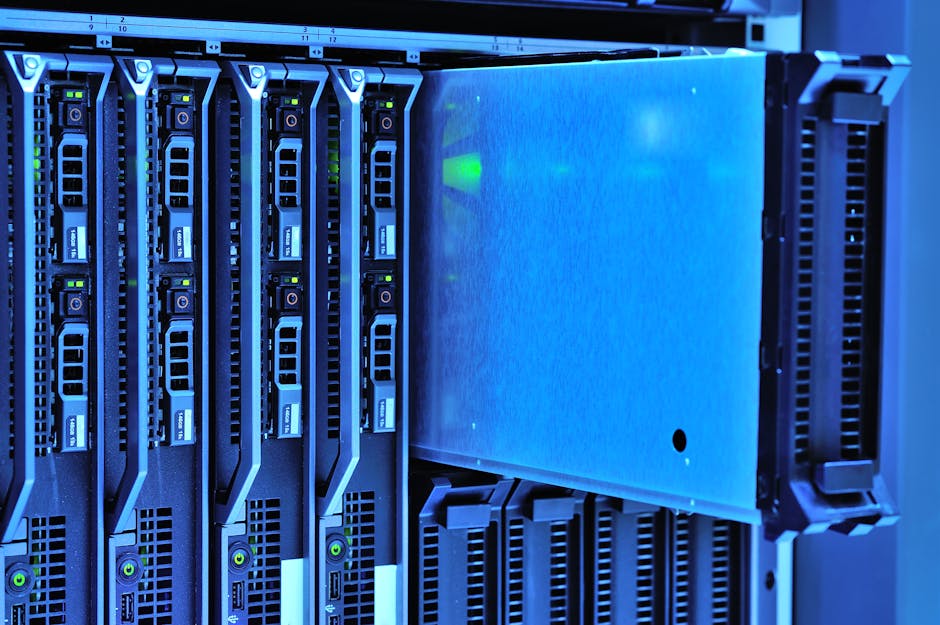
The journey that followed transformed not just our technology stack but our entire approach to trade promotion planning and execution. Implementing AI Cloud Infrastructure wasn't simply a migration project; it became a masterclass in aligning computational capabilities with business imperatives. We learned which battles mattered, where to compromise, and how to measure success beyond traditional IT metrics. Today, our TPM systems process promotional effectiveness calculations in real-time, our price elasticity models run continuously across all categories, and our collaborative planning sessions with retailers happen in cloud environments that both parties can access securely. But the path here was filled with missteps, revelations, and hard-earned wisdom that I wish someone had shared with us at the outset.
Lesson One: Infrastructure Decisions Are Category Management Decisions
Our first major mistake was treating the cloud migration as an IT initiative separate from our core CPG operations. We assembled a project team heavy on infrastructure engineers and light on people who understood trade promotion optimization or incrementality measurement. The result? A beautifully architected cloud environment that couldn't efficiently handle the specific computational patterns of promotional analysis. TPM workloads don't behave like standard enterprise applications—they spike dramatically during planning cycles, require massive parallel processing for scenario modeling, and generate enormous datasets from sell-in and sell-out metrics that need instant accessibility.
The turning point came when our VP of Trade Marketing sat down with the infrastructure team and walked them through a single promotional planning cycle. She showed them how category velocity calculations cascade through price elasticity models, how planogram compliance data feeds markdown optimization algorithms, and how everything converges during the critical 72-hour window before promotional execution. Suddenly, the infrastructure team understood why we needed burst computing capacity, why data lake architecture mattered more than traditional databases, and why network latency between our analytics clusters and retail partner APIs could cost us hundreds of thousands in promotional ROAS.
We rebuilt our AI Cloud Infrastructure requirements from this foundation. Instead of generic cloud capabilities, we specified infrastructure that could handle 10x computational spikes during planning windows, maintain sub-200ms query response times on datasets exceeding 50 terabytes, and provide secure multi-party computation environments for collaborative planning with retailers like Walmart and Kroger. This wasn't just infrastructure—it was Trade Promotion Optimization translated into computational requirements. Every architectural decision traced back to a specific business process: how we measured incrementality, how we allocated promotional budgets across categories, how we forecasted out-of-stock risks during high-velocity promotional periods.
Lesson Two: Start With Demand Forecasting, Not Comprehensive Transformation
Our second lesson came from scope creep. Energized by the possibilities of AI Cloud Infrastructure, we initially proposed moving everything simultaneously: demand forecasting, promotional planning, supply chain collaboration, consumer insights analytics, inventory management, and merchandising strategy tools. The project timeline stretched to 18 months. The budget ballooned. Cross-functional dependencies multiplied until the Gantt chart looked like abstract art.
A veteran colleague offered advice that saved the initiative: "Start with the process that's bleeding the most money right now." For us, that was demand forecasting for promotional periods. Our existing models consistently under-predicted demand during trade promotions, leading to out-of-stock situations that cost us roughly $3.2 million annually in lost sales and damaged retailer relationships. We carved out demand forecasting as a standalone pilot, moved just that workload to cloud-based AI infrastructure, and gave ourselves 90 days to demonstrate measurable improvement.
The focused approach paid dividends beyond the obvious cost savings. By concentrating on one domain, we learned how to operationalize machine learning models in production, how to integrate real-time point-of-sale data from retail partners, and how to present forecasting outputs in formats that category managers actually trusted and used. We discovered that custom AI solutions required ongoing refinement based on user feedback—not one-time deployment. When our forecasting accuracy improved by 23% and out-of-stock incidents dropped by 41%, we had both proof of concept and organizational momentum. More importantly, we had a working template for migrating additional functions to AI Cloud Infrastructure without disrupting operations.
Lesson Three: Retail Cloud Analytics Requires Partnership-Grade Security
Our third lesson emerged from an unexpected source: our retail partners themselves. As we expanded our AI Cloud Infrastructure to support collaborative planning and shared analytics, we assumed our enterprise-grade security would satisfy retailer requirements. We were wrong. Retailers operate in a trust-deficit environment where supplier data access has historically been a source of competitive intelligence leakage. When we proposed cloud-based joint business planning sessions with shared access to promotional performance data, several major partners initially declined.
The breakthrough required rethinking security architecture through a partnership lens. Working with a regional grocery chain that agreed to pilot the approach, we implemented multi-party computation frameworks that allowed both parties to run analytics on combined datasets without either side seeing the other's raw data. We created role-based access controls so granular that our category managers could view aggregated promotional lift metrics without accessing individual store-level transaction data. We built audit trails that showed retailers exactly which of their data points our algorithms touched and when.
This partnership-grade security model became a differentiator in retailer negotiations. Our Retail Cloud Analytics capabilities enabled planning conversations that were previously impossible: collaborative optimization of promotional calendars to minimize category cannibalization, joint analysis of price elasticity across complementary products, shared forecasting models that incorporated both our shipment data and retailers' point-of-sale trends. One major regional partner told us we were the first CPG supplier whose systems they trusted enough to grant API access to their daily inventory positions. That trust translated into shelf space allocation advantages and preferential promotional placement worth far more than the infrastructure investment.
Lesson Four: TPM AI Solutions Need Human-Centered Guardrails
Perhaps our most painful lesson involved the human dimension of AI-driven trade promotion management. Six months into production deployment of our TPM AI Solutions, we noticed something troubling: our category managers were increasingly rubber-stamping AI recommendations without the deep engagement that had previously characterized promotional planning. When we investigated, we found that the AI system had become too good at generating complete promotional plans. It optimized budget allocation, selected promotional mechanics, forecasted ROI, and even drafted retailer pitch decks. Category managers felt their expertise was being marginalized.
The symptom was declining promotional effectiveness despite sophisticated AI Cloud Infrastructure. Our algorithms optimized for historical patterns and measurable incrementality, but they missed emerging trends that experienced category managers sensed from consumer insights and retail partner conversations. A particularly costly example: our AI recommended deep discounting on a product line just as consumer preferences were shifting toward premium alternatives. A category manager had noticed the trend signals but deferred to the AI recommendation, resulting in promotional spending that accelerated a category decline rather than defending market share.
We redesigned our TPM interface to position AI as a collaborative partner rather than an autonomous decision-maker. The system now presents promotional recommendations with explicit uncertainty quantifications, highlights where current conditions diverge from historical training data, and requires human sign-off on decisions with strategic implications. We added "challenge mode" where category managers can propose alternative strategies and see real-time comparative analysis against AI recommendations. Most importantly, we instrumented the system to learn from human overrides, incorporating category manager judgment into future models. This human-centered approach to AI Cloud Infrastructure restored the expertise-driven culture that had made our trade promotion function successful while retaining the computational advantages of advanced analytics.
Lesson Five: Infrastructure Costs Are Promotional Investment, Not IT Overhead
Our final lesson centered on how we framed and justified infrastructure investment. Initially, AI Cloud Infrastructure costs appeared in IT budgets, evaluated against generic efficiency metrics like cost-per-compute-hour or storage utilization rates. This framing made every optimization discussion focus on reducing cloud spending rather than increasing promotional effectiveness. Finance teams questioned why our cloud costs were growing even as we retired on-premise servers.
The reframing happened during an annual planning review when our CFO asked a simple question: "How much promotional budget did this infrastructure save or make more effective?" We went back and calculated the answer. Our AI-enhanced demand forecasting had reduced emergency shipments and out-of-stock penalties by $4.1 million. Our real-time promotional performance tracking had enabled in-flight optimization that improved promotional ROAS by 18% on average, translating to $7.3 million in incremental margin. Our collaborative planning capabilities had secured promotional calendar slots worth approximately $2.8 million in preferential positioning. Against these impacts, our annual AI Cloud Infrastructure costs of $1.9 million looked less like IT overhead and more like high-ROI promotional investment.
We restructured how infrastructure costs flowed through our P&L. Cloud infrastructure directly supporting trade promotion optimization now appears as a component of promotional spending, evaluated by the same ROI metrics we apply to trade funds and advertising. This isn't just accounting gamesmanship—it changed how we think about infrastructure decisions. When evaluating whether to add GPU-accelerated computing clusters for real-time markdown optimization, we don't ask "Can we afford the infrastructure cost?" We ask "Will this improve our markdown effectiveness enough to justify the investment?" That lens leads to very different, and much better, decisions about where to deploy computational resources.
The Ongoing Journey and Emerging Lessons
Three years into our AI Cloud Infrastructure journey, we're still learning. Recent lessons include the importance of multi-cloud strategies for negotiating leverage with platform providers, the value of edge computing for processing point-of-sale data closer to retail locations, and the emerging role of federated learning in collaborative analytics that preserve competitive boundaries. We're discovering that AI infrastructure isn't a destination but an evolving capability that must adapt as CPG competitive dynamics shift.
Looking back at that infrastructure crisis three years ago, I'm almost grateful it happened when it did. It forced us to confront the reality that modern trade promotion management requires computational capabilities far beyond what traditional IT could provide. It pushed us to learn hard lessons about aligning infrastructure with business processes, focusing on specific use cases before attempting comprehensive transformation, building partnership-grade security into collaborative analytics, maintaining human expertise in AI-augmented workflows, and framing infrastructure investment through promotional effectiveness metrics.
Conclusion
For CPG professionals navigating similar infrastructure decisions today, my core advice is simple: treat your cloud infrastructure journey as a trade promotion transformation project that happens to require new technology, not a technology project that happens to affect trade promotion. Involve category managers and trade marketing leaders from day one. Start with one high-value process and prove measurable business impact before expanding scope. Build security and governance models that enable retailer collaboration, not just internal analytics. Keep humans in the loop with clear roles for expertise and judgment. And measure success by promotional effectiveness metrics—incrementality, ROAS, category velocity, market share—not infrastructure utilization statistics. The lessons we learned the hard way can smooth your path, but ultimately every CPG organization will forge its own journey through this landscape. As AI capabilities continue advancing and competitive intensity increases, sophisticated AI Trade Promotion infrastructure will increasingly separate market leaders from followers. The question isn't whether to make this journey, but how quickly and strategically you can navigate it.
Comments
Post a Comment