The Essential AI-Driven Demand Forecasting Implementation Checklist
Fashion retail operates on razor-thin margins where inventory decisions made months in advance determine profitability outcomes in selling seasons measured in weeks. A single percentage point improvement in sell-through rate can translate to millions in preserved margin. A five-point reduction in stockout rate can capture sales that otherwise disappear to competitors forever. Yet despite these stakes, many retailers still approach demand forecasting with spreadsheet models, historical averages, and merchant intuition developed in an era before omnichannel complexity, fast fashion cycles, and digitally empowered customers. The gap between traditional forecasting capabilities and modern retail demands has never been wider, creating both risk for those who delay and opportunity for those who act strategically.
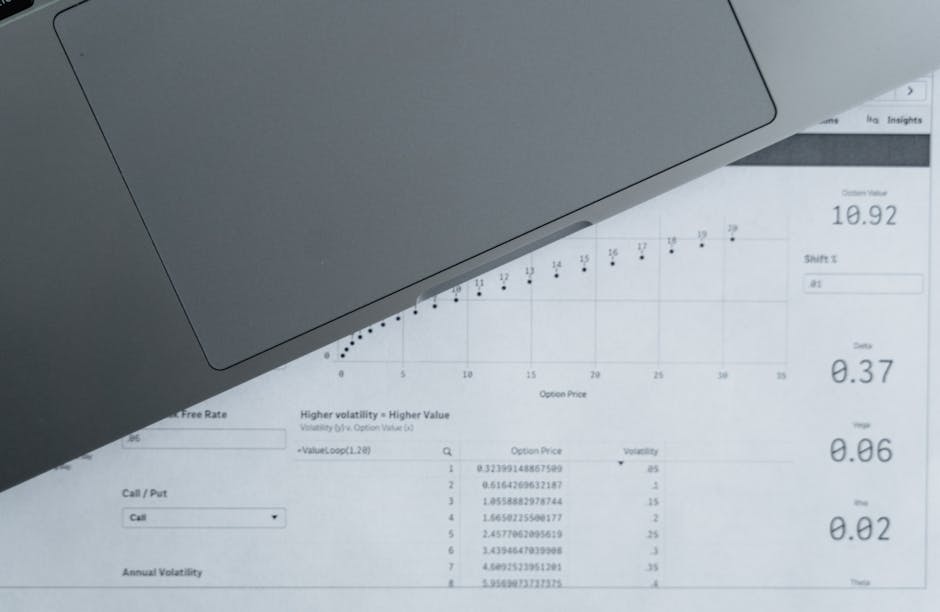
Implementing AI-Driven Demand Forecasting represents one of the most impactful transformations available to fashion retailers today, but success requires methodical execution across technology, data, processes, and people. This comprehensive checklist distills the critical steps, decision points, and rationale that separate successful implementations from costly false starts. Whether you are a merchandising executive building the business case, a planning director designing the roadmap, or a data leader architecting the solution, these checkpoints provide a structured path from current-state forecasting to AI-enabled inventory optimization.
Strategic Foundation: Before You Build, Know Why You Are Building
Define specific business outcomes with quantified targets. Vague objectives like "improve forecasting accuracy" set teams up for ambiguous results and diffused accountability. Instead, specify measurable outcomes tied to financial performance: reduce markdown rate from 32% to 24%, decrease stockout rate on A-items from 18% to 10%, improve inventory turns from 4.2x to 5.5x annually, increase GMROI by 15 percentage points. These concrete targets drive technology requirements, data priorities, and ROI calculations. They also create clarity for stakeholders across merchandising strategy, supply chain management, and finance who must align on success criteria.
Map current-state pain points to AI capabilities. AI-Driven Demand Forecasting solves specific problems: processing more demand signals than humans can track, detecting patterns across millions of SKU-location-time combinations, updating predictions continuously as new data arrives, and optimizing across competing objectives like service level and inventory investment. Document where your current forecasting process fails: Are you consistently surprised by trend timing? Do you struggle with new item forecasting? Is your in-season reforecasting too slow? Does demand variability across channels overwhelm your planning capacity? Match these pain points to AI capabilities to ensure you are solving real problems, not implementing technology for its own sake.
Secure executive sponsorship across merchandising, planning, and IT. Successful AI implementations require sustained investment, organizational change, and cross-functional coordination over 12-18 months minimum. Without committed executive sponsorship, initiatives stall when competing priorities emerge or early challenges arise. The sponsor must have authority over merchandising strategy, budgetary control over technology investments, and credibility with the planning teams whose workflows will transform. Ideally, this is a Chief Merchant or Chief Operating Officer who understands both the business opportunity and the change management required.
Establish baseline metrics before any implementation begins. You cannot prove improvement without knowing your starting point. Document current performance across key metrics: forecast accuracy (MAPE or WMAPE by category and time horizon), inventory health (weeks of supply distribution, aging inventory percentage), financial outcomes (gross margin, markdown rate, stockout cost), and operational metrics (forecast cycle time, manual override frequency). These baselines become the comparison point for measuring AI impact and justifying continued investment. Many retailers skip this step in their eagerness to implement, then struggle to quantify the value they have created.
Data Infrastructure: The Foundation Everything Else Depends On
Audit data quality across all critical forecasting inputs. AI models are only as good as the data they train on. Conduct a thorough quality assessment of historical sales data, inventory positions, pricing and promotion history, product attributes, customer transaction data, and any external data sources you plan to incorporate. Look specifically for: missing values (are stockout periods flagged or do they appear as zero demand?), inconsistent categorization (do product hierarchies change over time?), data latency (how quickly does POS data reach your data warehouse?), and attribution accuracy (are promotional sales correctly tagged?). Prioritize fixing data quality issues over adding new data sources. Clean, complete data on core metrics outperforms messy, comprehensive data every time.
Standardize product attributes and hierarchies across all categories. Inconsistent product data undermines AI-Driven Demand Forecasting in multiple ways: models cannot learn cross-category patterns, similar items are not recognized as substitutes, and attribute-based forecasting for new items becomes impossible. Establish a master data management process that enforces consistent attributes: style type, fabric content, color family, fit profile, price tier, seasonality, and target customer segment. When a denim jacket in one category is tagged differently than a denim jacket in another, the AI cannot transfer learning between them. Standardization is tedious work, but it is non-negotiable for effective forecasting.
Implement processes to capture stockout and out-of-stock periods. This is the single most common data flaw that corrupts demand forecasting. When an item is out of stock, zero sales does not mean zero demand; it means you failed to capture the sale. If your historical data shows an item sold zero units for two weeks, was demand actually zero or were you simply out of stock? AI models trained on uncorrected data will systematically underforecast items that have experienced stockouts, creating a vicious cycle of understocking high-demand products. Flag all stockout periods in your data, impute demand during those periods using comparable items or pre-stockout trends, and ensure future data capture distinguishes zero demand from zero availability.
Integrate external demand signals beyond internal transaction data. Retail Predictive Analytics becomes significantly more powerful when models can process signals that precede purchase behavior. Valuable external data sources include: search trends (Google Trends, site search volume), social media engagement (mentions, sentiment, influencer activity), competitive intelligence (pricing, assortment, stockout patterns), weather data (actual and forecasted), economic indicators (consumer confidence, employment data), and event calendars (local events, holidays, school schedules). Start with one or two high-value sources rather than attempting comprehensive integration initially. Many AI development platforms can help identify which external signals correlate most strongly with your demand patterns.
Model Development: Building Forecasting Engines That Actually Work
Start with a limited pilot scope to validate approach before scaling. The temptation to implement AI-Driven Demand Forecasting enterprise-wide immediately is strong, but the risk is substantial. Begin with a constrained pilot: one product category, limited store formats, single planning horizon. This allows you to test model performance, refine data pipelines, identify integration issues, and build organizational confidence before committing to full-scale deployment. A successful pilot also generates proof points that overcome skepticism and secure resources for broader implementation. Define clear success criteria for the pilot: if forecast accuracy improves by X% and inventory metrics improve by Y%, you will proceed to next phase.
Implement ensemble models rather than relying on single algorithm approaches. Different forecasting algorithms excel in different contexts: time series models (ARIMA, Prophet) capture seasonality and trends, machine learning models (gradient boosting, neural networks) identify complex pattern relationships, and causal models incorporate promotional and event impacts. Rather than selecting a single approach, build ensemble models that combine multiple algorithms and weight their contributions based on performance. This reduces the risk of model-specific weaknesses and improves robustness across different demand patterns. Ensemble approaches consistently outperform single-model implementations in fashion retail environments.
Develop separate models for different forecasting horizons and use cases. A model optimized for 12-month strategic planning uses different inputs and methods than a model optimized for weekly replenishment decisions. Long-horizon forecasts emphasize trend detection and category-level patterns; short-horizon forecasts emphasize recent momentum and item-level precision. Build distinct models for: strategic assortment planning (6-12 months out), initial buy allocation (3-6 months), in-season reforecasting (weekly or daily updates), and replenishment optimization (daily or real-time). Trying to use a single model for all purposes forces compromises that reduce effectiveness everywhere.
Build transparency and explainability into model outputs. Black-box forecasts that provide no rationale for predictions will not gain adoption with merchandising teams who have decades of category expertise. Implement explainability features that show which factors are driving specific forecasts: this style is predicted to perform well because similar silhouettes are trending, search volume is increasing, and comparable items are selling ahead of plan. Planners should be able to see the model's reasoning, challenge assumptions, and provide feedback. This transparency builds trust, surfaces data issues, and creates a learning loop that improves both models and human judgment over time.
Integration and Operations: Making AI Forecasting Part of Daily Workflows
Integrate forecasts directly into existing planning and allocation systems. If merchandisers must export data from their planning tools, input it into an AI system, then manually transfer forecasts back, adoption will fail. AI-Driven Demand Forecasting must integrate seamlessly into existing workflows: forecasts populate directly into your merchandise planning system, allocation recommendations flow into your WMS, and exception alerts appear in the tools planners already use. This requires API integration, data synchronization, and often custom development work, but it is essential. Technology that creates additional work rather than reducing it will be abandoned regardless of accuracy.
Establish clear protocols for when humans should override AI forecasts. The goal is not to eliminate human judgment but to optimize the collaboration between AI pattern recognition and human contextual knowledge. Define specific scenarios where manual overrides are appropriate: quality issues that will suppress demand, upcoming store closures, strategic decisions to exit certain categories, supplier reliability concerns. Track all overrides, document the rationale, and analyze outcomes. Over time, patterns will emerge showing where human intuition adds value and where it introduces bias. Use these insights to refine both the models (incorporate factors that drive valid overrides) and the override protocols (reduce overrides that consistently underperform the AI).
Implement continuous monitoring and automated model retraining. Demand patterns change constantly in fashion retail: customer preferences evolve, competitive dynamics shift, economic conditions fluctuate. A model trained on last year's data degrades in accuracy as the environment changes. Build infrastructure for continuous performance monitoring: track forecast accuracy weekly, compare predicted versus actual demand by category and item, identify where errors are systematic versus random. Implement automated retraining schedules (monthly or quarterly depending on your planning cycle) that update models with recent data. Monitor for drift where model performance degrades over time, signaling the need for more substantial model updates or new variable incorporation.
Create feedback loops between forecasts, outcomes, and model improvements. Every selling season generates new data about what the models predicted correctly and incorrectly. Capture these insights systematically: which product attributes correlate with forecast errors? Are certain store formats or regions consistently over or under-forecasted? Do external events (weather anomalies, viral trends) create prediction gaps? Use these analyses to refine models, add new variables, adjust algorithms, and improve data quality. The retailers who build strong learning loops continuously improve their Inventory Optimization AI capabilities; those who simply run the same models repeatedly see diminishing returns over time.
Organizational Enablement: People and Processes Must Evolve with Technology
Invest in training programs that build forecasting literacy across planning teams. Many merchandisers and planners come from buying backgrounds with limited statistical or analytical training. AI-Driven Demand Forecasting introduces concepts like confidence intervals, probability distributions, and algorithmic bias that feel foreign. Develop training programs that build foundational literacy: what is the AI actually doing? How should planners interpret forecast outputs? When should they trust the model versus their intuition? What feedback improves the system? This is not about turning merchants into data scientists but about building enough understanding to enable effective collaboration between human expertise and AI capabilities.
Redefine roles and responsibilities as forecasting becomes more automated. As AI handles more of the computational and pattern-recognition work in demand forecasting, planning roles must evolve. Junior planners who previously spent hours building spreadsheet forecasts can focus on exception management, supplier negotiations, and strategic initiatives. Senior merchants can devote more time to trend analysis, assortment strategy, and customer experience rather than forecasting mechanics. Be explicit about how roles are changing, what new skills are valued, and how success metrics are evolving. Organizational anxiety about AI replacing jobs can derail implementations; clarity about how roles are being enhanced rather than eliminated builds support.
Establish governance processes for model updates and forecasting policies. As AI-Driven Demand Forecasting scales across the organization, decisions about model changes, data priorities, and forecasting policies need clear ownership and process. Create a cross-functional governance team (merchandising, planning, data science, IT) that meets regularly to: review model performance, prioritize enhancements, resolve data issues, approve significant methodology changes, and align forecasting policies with business strategy. Without governance, different teams implement conflicting approaches, models diverge across categories, and the forecasting environment becomes fragmented rather than standardized.
Celebrate wins and share success stories across the organization. Change management is not just about process and training; it is about building momentum and belief. When AI forecasts correctly predict an emerging trend that merchants initially doubted, share that story. When in-season reforecasting prevents a stockout that would have cost six figures in lost sales, quantify and communicate it. When improved inventory turns free up working capital for strategic investments, connect the dots. Success stories build confidence, overcome skepticism, and demonstrate that AI-Driven Demand Forecasting is not a theoretical initiative but a practical tool delivering measurable business value.
Conclusion: From Checklist to Competitive Advantage
The fashion retail landscape rewards those who consistently get inventory decisions right: the right styles in the right sizes in the right locations at the right time. Traditional forecasting methods, built for slower-moving, more predictable demand environments, simply cannot keep pace with the velocity and complexity of modern retail. AI-Driven Demand Forecasting is not a luxury or an experiment; it is rapidly becoming table stakes for competitive performance in categories where Zara, H&M, and other fast-fashion leaders have demonstrated the power of data-driven decision-making.
Yet technology alone does not create advantage. The retailers who will succeed are those who approach implementation methodically: building solid data foundations before sophisticated models, integrating AI into existing workflows rather than creating parallel systems, developing organizational capabilities alongside technical capabilities, and treating forecasting as a continuously improving discipline rather than a one-time project. This checklist provides the roadmap, but execution requires sustained commitment, cross-functional collaboration, and willingness to learn from both successes and setbacks. As the broader application of Generative AI for Retail continues to evolve, the foundational capabilities established through demand forecasting will position forward-thinking retailers to adopt emerging technologies faster and more effectively. The difference between retailers who check these boxes thoughtfully and those who rush through implementation will be measured in margin points, inventory turns, and ultimately, competitive survival in an industry that shows no mercy for poor inventory decisions.
Comments
Post a Comment