AI-Driven Production Excellence: Lessons from the Factory Floor
When our production line at a mid-sized aerospace components facility began experiencing recurring quality issues that traditional Six Sigma methods couldn't fully resolve, we knew something fundamental had to change. The sporadic defects were costing us millions in rework and threatening our position as a tier-one supplier. What we discovered through our journey toward AI-Driven Production Excellence transformed not just our quality metrics, but our entire approach to manufacturing operations. The lessons we learned along the way offer valuable insights for any discrete manufacturing operation struggling with similar challenges in today's rapidly evolving industrial landscape.
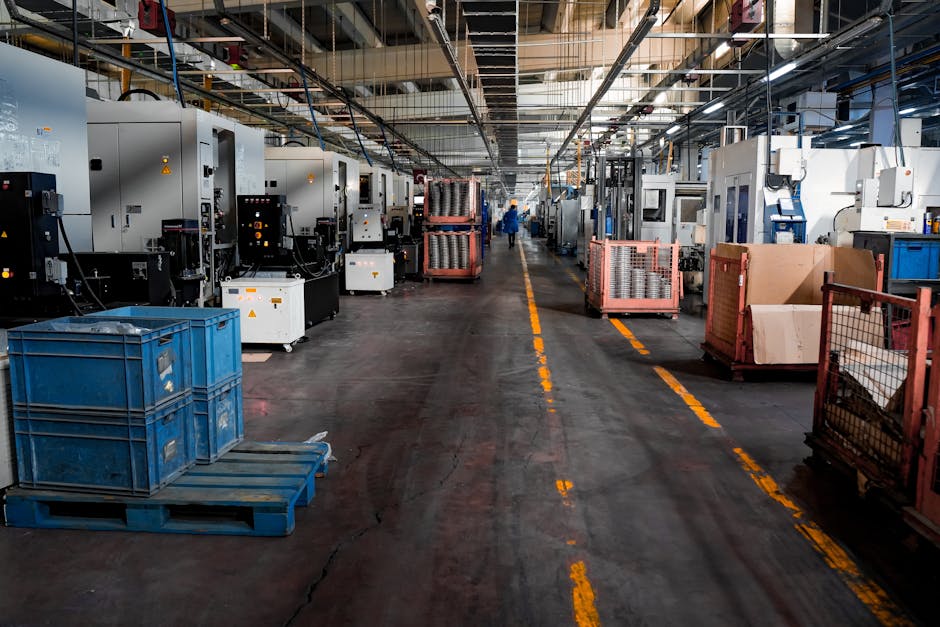
Our transformation began with a sobering realization: the gap between our current capabilities and what AI-Driven Production Excellence could deliver was wider than we initially imagined. We had invested heavily in Manufacturing Execution Systems and Enterprise Resource Planning platforms, yet we were still making critical production decisions based on lagging indicators and historical averages. The turning point came during a root cause analysis session where our quality team identified seventeen different variables that could contribute to a single defect type—far too complex for manual monitoring and traditional statistical process control methods.
Lesson One: Start with Your Most Painful Problem, Not Your Easiest Win
The conventional wisdom in digital transformation suggests starting with quick wins to build momentum and executive support. We initially followed this advice, implementing AI-Driven Production Excellence tools in our inventory management processes where the data was cleanest and the ROI calculations most straightforward. The results were respectable—about 12% reduction in carrying costs—but they didn't move the needle on our core business challenges.
The real breakthrough came when we redirected our focus to our most vexing problem: unplanned downtime on our CNC machining centers. These machines represented 40% of our capital equipment value and were the bottleneck in our production cycle time. Traditional preventive maintenance schedules weren't working because they were based on calendar intervals, not actual equipment condition. When we deployed Predictive Maintenance AI sensors and algorithms on these critical assets, we cut unplanned downtime by 67% within the first six months. This single application of AI-Driven Production Excellence delivered more business value than our previous three years of incremental improvement initiatives combined.
The Data Quality Reality Check
One harsh lesson emerged early: our historical maintenance data was far messier than anyone admitted. Technicians had been using inconsistent terminology in work orders, critical sensor readings were missing for extended periods, and no one had properly documented informal repairs. We spent three months cleaning and normalizing data before our predictive models could deliver reliable insights. This wasn't wasted time—it was essential foundation work that paid dividends across multiple AI applications later.
Lesson Two: Manufacturing Process Optimization Requires Cross-Functional Collaboration
Our second major lesson challenged the siloed structure that had defined our operations for decades. AI-Driven Production Excellence exposed dependencies and optimization opportunities that crossed traditional departmental boundaries. When our AI system recommended adjusting production schedules to reduce changeover frequency, it required simultaneous changes to purchasing patterns, warehouse staging, and quality inspection protocols.
The resistance we encountered wasn't about technology—it was about territorial boundaries and performance metrics that incentivized local optimization at the expense of system-wide efficiency. Our production planning team was measured on schedule adherence, while procurement was evaluated on price variance and inventory turns. These conflicting metrics created organizational antibodies that fought against the holistic optimization that AI systems naturally gravitate toward.
We restructured our approach by leveraging expertise in tailored AI solution development to create a unified digital twin of our entire value stream. This allowed different departments to visualize how their decisions impacted Overall Equipment Effectiveness, First-Pass Yield, and total production costs simultaneously. When the warehouse supervisor could see how staging materials differently would reduce machine idle time, and when quality inspectors understood how their sampling protocols affected cycle time, collaboration became natural rather than forced.
Breaking Down the Metrics Wall
We eventually replaced individual department scorecards with shared value stream metrics. The new KPIs focused on customer order fulfillment time, total manufacturing cost per unit, and product quality at the system level. This single change did more to enable AI-Driven Production Excellence than any technology deployment because it aligned human decision-making with what the AI was optimizing for.
Lesson Three: The Human Element Determines Success or Failure
Perhaps our most critical lesson involved the people side of Manufacturing Process Optimization. We initially made the mistake of framing AI implementation as a technology project led by IT and engineering. The shop floor supervisors and line operators—the people who understood the actual production realities—were brought in too late and treated as end users rather than co-creators.
The first version of our AI-powered production scheduling system was technically sophisticated but practically useless. It generated schedules that looked optimal on paper but ignored dozens of real-world constraints that experienced schedulers knew intuitively: certain material batches didn't machine well together, specific operator skill combinations were needed for complex setups, and Thursday afternoon was when the maintenance team performed calibrations that temporarily reduced capacity.
We completely reset our approach, forming cross-functional teams that paired data scientists with manufacturing veterans. A master machinist with thirty years of experience worked alongside an AI engineer fresh from graduate school. Their collaboration produced insights neither could have generated alone. The machinist explained why certain tool wear patterns predicted quality issues hours before they manifested, while the data scientist showed how machine learning could detect these patterns across hundreds of subtle sensor signals.
- Involve operators from day one in defining what problems AI should solve and how solutions should be presented
- Design interfaces that complement existing workflows rather than replacing familiar tools
- Create feedback loops where operators can flag AI recommendations that don't make practical sense
- Celebrate human expertise as the essential complement to AI capability, not as something being replaced
Lesson Four: Scale Gradually but Architecturally
Another lesson that reshaped our implementation strategy was the balance between moving quickly and building sustainable infrastructure. We saw competitors rush to deploy AI applications across their entire operations simultaneously, only to create a fragmented landscape of disconnected tools that couldn't share data or insights.
Our approach to AI-Driven Production Excellence emphasized architectural thinking from the beginning. Even when we were running small pilots, we built them on a common data platform with standardized APIs and governance structures that would support enterprise-wide scaling. This meant our initial deployments took slightly longer, but each subsequent application became progressively faster and cheaper to implement.
When we expanded from predictive maintenance to AI-driven quality inspection, we reused 70% of the data infrastructure and model training pipelines we'd built for the first use case. By our fourth major AI application—demand forecasting integrated with production planning—we were deploying in weeks rather than months because the foundational architecture was mature and proven.
The Integration Imperative
We learned that standalone AI applications deliver value, but integrated AI ecosystems deliver transformation. When our predictive maintenance system could communicate with production scheduling, maintenance work was automatically planned during already-scheduled downtime rather than forcing unplanned interruptions. When quality inspection AI fed insights back to process parameter optimization, we created a closed-loop system that continuously improved First-Pass Yield without human intervention.
Lesson Five: Change Management Is Not an Afterthought
Our most painful lesson involved organizational change management. We initially treated this as a communication and training challenge—something to address after the technology was working. This was naive. The cultural and organizational changes required for AI-Driven Production Excellence are at least as significant as the technical changes, and they take longer to implement successfully.
Resistance emerged from unexpected places. Our most experienced quality engineers felt threatened because AI systems could detect defect patterns they had missed. Production supervisors worried that algorithmic scheduling would undermine their authority and expertise. Even executives who championed the initiative struggled when AI recommendations contradicted their gut instincts about production priorities.
We eventually developed a structured change management program that addressed psychological, organizational, and practical dimensions of the transformation. We emphasized how AI-Driven Production Excellence would elevate human roles rather than diminish them—freeing quality engineers to focus on root cause analysis rather than manual inspection, enabling supervisors to handle exceptions and continuous improvement rather than routine scheduling, and giving executives better information for strategic decisions.
Training programs were redesigned to build AI literacy across the organization. Shop floor operators learned basic concepts of how machine learning models worked and what data quality meant, not to turn them into data scientists but to help them understand and trust the systems they interacted with daily. This investment in human capital proved just as important as our investment in technology infrastructure.
Lesson Six: Measure What Matters and Expect Surprises
Our final major lesson involved measurement and continuous improvement of AI systems themselves. We initially focused on technical metrics like model accuracy and prediction confidence intervals. These mattered, but they didn't directly correlate with business impact. A highly accurate model that predicted equipment failures twelve hours in advance wasn't actually useful if our maintenance team needed twenty-four hours to source replacement parts.
We shifted to measuring AI-Driven Production Excellence initiatives against operational and business metrics: reduction in unplanned downtime measured in hours and dollars, improvement in Overall Equipment Effectiveness, decrease in scrap and rework costs, and acceleration of New Product Introduction cycle times. These tangible outcomes resonated with stakeholders across the organization and justified continued investment.
We also discovered beneficial outcomes we hadn't anticipated. The data infrastructure we built to support AI applications improved decision-making across the board, even in areas where we hadn't deployed AI yet. The cultural shift toward data-driven decision-making reduced political disagreements about production priorities. The cross-functional collaboration required for AI implementation broke down silos that had persisted for years. These second-order benefits often exceeded the direct ROI from specific AI applications.
Conclusion
Reflecting on our three-year journey toward AI-Driven Production Excellence, the technical challenges were actually the easiest to overcome. The hard parts were organizational, cultural, and strategic: getting different functions to collaborate around shared goals, helping people adapt to new ways of working, making smart decisions about where to invest limited resources, and maintaining momentum through inevitable setbacks and learning curves. The lessons we learned—starting with painful problems, ensuring cross-functional collaboration, prioritizing the human element, building scalable architecture, managing change proactively, and measuring what truly matters—apply far beyond our specific facility or industry. For manufacturing organizations embarking on similar transformations, partnering with experienced providers of Generative AI Solutions can accelerate the journey and help avoid the costly mistakes we made along the way. The destination—a manufacturing operation that continuously learns, adapts, and optimizes—is worth every challenge encountered on the path.
Comments
Post a Comment