Intelligent Automation: Five Critical Lessons from Real Implementations
When a mid-sized pharmaceutical distributor faced a crisis after shipping expired medications to three major hospital networks, the root cause wasn't human negligence or system failure in the traditional sense. It was the invisible gap between their warehouse management software and their compliance tracking system—a gap that Intelligent Automation could have bridged seamlessly. This incident, which cost the company over two million dollars in recalls and penalties, represents just one of countless scenarios where organizations learned the hard way that manual coordination between digital systems creates dangerous blind spots. The stories that follow reveal the transformative power of automated intelligence when applied thoughtfully, and the costly mistakes that precede genuine adoption.
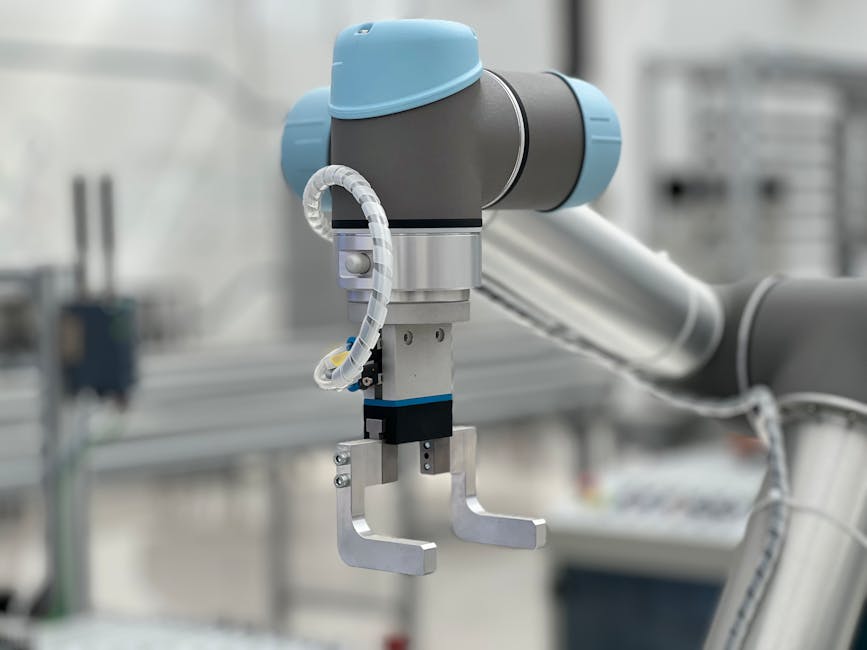
The journey toward Intelligent Automation rarely begins with visionary leadership or strategic planning. Instead, it typically starts with a crisis, a near-miss, or a competitor's sudden advantage that forces organizations to confront the limitations of their current operations. What distinguishes successful implementations from failed experiments is not the technology itself, but the lessons learned along the way—insights gained through trial, error, and sometimes painful experience. These real-world stories illuminate the path forward for organizations still operating with fragmented systems and manual workarounds.
Lesson One: The Invisible Cost of Context Switching
A regional automotive parts supplier discovered this lesson during their annual inventory audit when they found discrepancies totaling over $340,000 in missing or misclassified components. The investigation revealed something unexpected: their warehouse staff was switching between five different systems to process a single order—an ERP for order management, a separate WMS for location tracking, a spreadsheet for special handling instructions, a legacy system for hazardous materials compliance, and a manual logbook for quality notes. Each context switch consumed an average of twelve seconds, but more critically, each transition introduced a decision point where information could be misinterpreted, forgotten, or incorrectly transferred.
The implementation of Intelligent Automation transformed this scenario by creating a unified interface that pulled data from all five systems simultaneously, applying business rules automatically, and flagging exceptions without requiring human intervention for routine decisions. Warehouse associates now interact with a single screen that presents exactly the information needed for each task, with the automation layer handling all the background coordination, validation, and compliance checking. The measurable impact extended beyond the elimination of inventory discrepancies—order processing time decreased by 43 percent, training time for new employees dropped from three weeks to four days, and employee satisfaction scores increased significantly as workers spent less time navigating systems and more time on value-adding activities.
The Hidden Human Cost
What the metrics didn't immediately capture was the psychological burden that context switching imposed on workers. Follow-up interviews revealed that employees had developed anxiety around order processing, constantly worried about missing a step or checking the wrong system. The cognitive load of maintaining awareness across five disconnected interfaces created a state of perpetual low-level stress that manifested in higher turnover rates and increased sick days. Intelligent Automation didn't just improve operational metrics; it restored human capacity for judgment, problem-solving, and customer service by eliminating the mental overhead of system navigation.
Lesson Two: Data Doesn't Speak Until Automation Listens
A food distribution company serving the hospitality industry maintained what they believed was a sophisticated data infrastructure. They captured information at every touchpoint: receiving timestamps, temperature logs, lot numbers, expiration dates, customer preferences, delivery schedules, and return reasons. Their database contained over fifteen million records spanning three years of operations. Yet when asked to predict which products would face shortage during the upcoming holiday season, their planning team spent six weeks building spreadsheets and still delivered recommendations that proved 60 percent inaccurate.
The problem wasn't data scarcity but interpretation paralysis. Human analysts could examine individual trends—historical sales patterns or supplier lead times—but lacked the cognitive capacity to synthesize dozens of variables simultaneously while accounting for seasonal variations, market trends, weather patterns, and supplier reliability metrics. Supply Chain Management suffered because valuable intelligence remained locked in unconnected data silos, accessible to queries but not to insight generation.
The transformation came through Intelligent Automation platforms designed specifically for pattern recognition across complex datasets. The system identified correlations that human analysts would never consider examining: the relationship between regional sporting events and prepared food demand, the predictive value of wholesale commodity price fluctuations six weeks prior to consumer buying shifts, and the impact of competitor promotional calendars on product category velocity. Within three months of implementation, forecast accuracy improved to 91 percent, inventory carrying costs decreased by 28 percent, and stockout incidents dropped by 76 percent. The same data that had been available for years suddenly became actionable because automation provided the interpretive layer that transformed information into intelligence.
Lesson Three: Exceptions Reveal the Rule
An industrial equipment manufacturer implemented Automated Inventory Systems expecting to streamline their routine operations—the 80 percent of transactions that followed predictable patterns. They designed their automation rules around standard scenarios: parts arriving from approved suppliers, orders shipping to established customers, and inventory movements between designated warehouse zones. The system performed admirably for these routine cases, processing thousands of transactions daily with minimal human oversight.
The revelation came when analyzing the 20 percent of transactions that triggered exception flags requiring human review. Rather than viewing these exceptions as system limitations, the operations team recognized them as learning opportunities. Each exception represented a scenario the initial automation rules hadn't anticipated—a new supplier shipping parts in non-standard packaging, a customer requesting split shipments to multiple locations, a quality issue requiring quarantine of specific lot numbers across multiple warehouse zones. Over eighteen months, the team reviewed over four thousand exceptions, identifying patterns that led to 147 new automation rules.
What began as an 80/20 automation ratio evolved to 94/6, then 97/3, as Intelligent Automation learned to handle increasingly complex scenarios. More importantly, the nature of exceptions changed. Early exceptions were often routine situations the system hadn't been programmed to recognize. Later exceptions represented genuine anomalies—potential fraud indicators, quality issues requiring investigation, or market opportunities like unexpected demand spikes that warranted strategic attention. The automation layer evolved from handling routine tasks to actively filtering for situations that truly required human expertise, dramatically improving the quality of human attention directed toward exception management.
Lesson Four: Integration Precedes Intelligence
A healthcare supply chain organization invested heavily in what they considered cutting-edge automation—an AI-powered demand forecasting system from a leading vendor. The platform featured machine learning algorithms, natural language processing for analyzing physician notes, and predictive analytics for patient census trends. Six months after implementation, the system's forecasts were less accurate than the spreadsheet-based method it was meant to replace. Executive leadership questioned whether the entire intelligent automation initiative was fundamentally flawed.
The diagnostic review revealed a critical oversight: the AI system was making predictions based on incomplete data because it wasn't properly integrated with all relevant source systems. Patient census data was flowing from the hospital information system, but the integration missed surgical schedules maintained in a separate system, emergency department admissions tracked in yet another platform, and physician preference cards stored in a legacy database. The AI was performing sophisticated analysis on approximately 60 percent of the relevant information, yielding sophisticated but fundamentally flawed predictions.
The lesson transformed the organization's entire approach to Intelligent Automation. Rather than beginning with the most advanced AI capabilities, they invested nine months in comprehensive system integration, creating unified data streams that captured patient flow, physician activity, seasonal patterns, and external factors like local event calendars and weather forecasts. Only after establishing these integration foundations did they reactivate the predictive algorithms. The results validated the integration-first approach: forecast accuracy jumped to 89 percent, supply costs decreased by $4.2 million annually, and critical supply stockouts dropped to near zero. The intelligence was in the system all along; it simply needed comprehensive information to generate valuable insights.
Lesson Five: Automation Amplifies Culture
Two regional retailers implemented nearly identical Inventory Optimization platforms within the same quarter. Both organizations had similar scale, comparable product categories, and equivalent technical infrastructure. Twelve months later, one company reported a 34 percent improvement in inventory turnover and a 41 percent reduction in stockouts, while the other showed negligible improvement and was planning to abandon the initiative. The difference wasn't in the technology but in the organizational culture surrounding its implementation.
The successful organization approached automation as a collaboration between human expertise and machine capability. Store managers and warehouse supervisors were involved in designing automation rules, their practical experience informing which decisions should be automated, which required human review, and what threshold parameters made sense for their specific context. When the system flagged potential issues, employees trusted the alerts because they understood the logic behind them. When automation recommendations conflicted with human intuition, there was a structured process for investigating the discrepancy and updating either the automation rules or the human mental models based on evidence.
The struggling organization implemented automation as a top-down mandate with minimal employee input. The system generated recommendations that frontline workers didn't understand and therefore didn't trust. When automation and human judgment conflicted, employees often bypassed the system rather than engaging with it. The automation platform became another obstacle rather than an enabler, amplifying existing cultural patterns of siloed decision-making and limited communication between levels of the organization.
This lesson illuminates a crucial truth: Intelligent Automation doesn't transform a dysfunctional organization into a high-performing one. Instead, it amplifies existing cultural patterns, making good organizations better and exposing dysfunction in struggling ones. The technology provides capability, but organizational culture determines whether that capability translates into meaningful improvement. The most sophisticated automation platform will fail in a culture that doesn't value continuous learning, cross-functional collaboration, and evidence-based decision-making.
Conclusion: From Lessons to Leadership
These five lessons, drawn from real implementations across industries, reveal a consistent pattern: Intelligent Automation succeeds not by replacing human judgment but by extending it, not by eliminating challenges but by transforming which challenges deserve human attention. The pharmaceutical distributor that began this narrative eventually implemented a comprehensive automation platform that bridged their compliance and operational systems, eliminating the dangerous gaps that led to their costly recall. But the technology alone didn't create that success—it was the lessons learned through experience that enabled them to implement thoughtfully, integrate comprehensively, and foster a culture where automation and human expertise genuinely complement each other. For organizations at any stage of their automation journey, these stories offer more than cautionary tales or success blueprints; they provide a framework for understanding that the path to operational excellence is paved with both technological capability and organizational wisdom. As enterprises continue advancing their operations, exploring solutions like AI Inventory Management becomes essential for maintaining competitive advantage while learning from the experiences of those who have navigated this transformation successfully.
Comments
Post a Comment