AI in Supply Chain: Data-Driven Insights Reshaping Logistics Performance
The logistics sector is undergoing a fundamental transformation driven by artificial intelligence technologies that convert vast datasets into actionable operational strategies. Organizations managing complex supply networks now leverage machine learning algorithms, predictive analytics, and cognitive automation to optimize every facet of their operations—from demand forecasting to last-mile delivery. This evolution represents more than incremental improvement; it marks a paradigm shift in how enterprises approach supply chain management, with data-driven decision-making replacing traditional intuition-based planning methodologies.
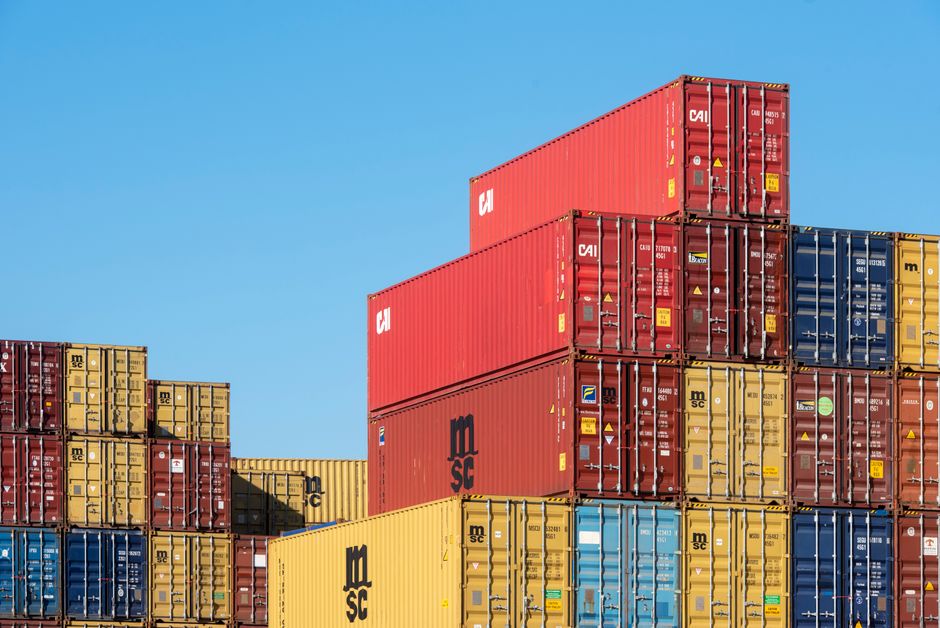
The quantifiable impact of AI in Supply Chain operations has become increasingly evident across multiple performance indicators. Recent industry analyses reveal that organizations implementing AI-powered logistics solutions have achieved inventory reduction rates averaging 25-35% while simultaneously improving order fulfillment accuracy to 99.2% or higher. Transportation cost savings range from 18% to 28% depending on network complexity and implementation maturity, while demand forecast accuracy improvements of 30-50% have been documented across retail, manufacturing, and distribution sectors. These statistical outcomes demonstrate that AI adoption delivers measurable financial returns alongside operational enhancements.
Quantifying AI in Supply Chain Performance Across Core Metrics
Warehouse operations represent one domain where AI implementation yields particularly striking statistical improvements. Computer vision systems combined with machine learning algorithms have enabled automated quality inspection processes that identify defects with 99.6% accuracy—substantially outperforming human inspection rates that typically plateau around 92-94%. Robotic picking systems guided by AI path optimization reduce order processing time by an average of 42%, while predictive maintenance algorithms applied to material handling equipment decrease unplanned downtime by 35-45%. The cumulative effect translates to throughput increases of 60-80% in facilities that achieve full AI integration across warehouse management systems.
Demand forecasting accuracy improvements constitute another area where AI in Supply Chain applications demonstrate quantifiable superiority over conventional statistical methods. Traditional forecasting approaches relying on historical averages and seasonal adjustments typically achieve accuracy rates of 60-70% for products with stable demand patterns, declining to 40-55% for items exhibiting high variability. Neural network models analyzing hundreds of demand-influencing variables—including weather patterns, social media sentiment, economic indicators, and competitor pricing—consistently achieve accuracy rates of 85-92% even for volatile product categories. This 25-35 percentage point improvement translates directly to reduced safety stock requirements and minimized stockout incidents.
Transportation Optimization Through Algorithmic Route Intelligence
Fleet management and route optimization represent logistics domains where AI algorithms process complexity levels beyond human cognitive capacity. A typical regional distribution network with 50 delivery vehicles serving 800 daily stops presents approximately 10^64 possible route combinations—a computational challenge that traditional optimization software addresses through simplified heuristics that sacrifice optimality for processing speed. Advanced AI routing engines employing reinforcement learning and genetic algorithms evaluate millions of scenarios per second, identifying solutions that reduce total distance traveled by 12-18% compared to conventional route planning while improving on-time delivery rates from industry averages of 89% to 96-98%.
Real-time route adjustment capabilities enabled by AI systems deliver additional measurable benefits. When unexpected disruptions occur—traffic incidents, weather delays, or urgent order insertions—AI algorithms recalculate optimal routes across entire fleets within 2-3 seconds, dynamically reassigning deliveries to minimize overall delay impact. Organizations deploying these systems report customer communication accuracy improvements of 45%, with estimated arrival time predictions accurate within 10-minute windows for 94% of deliveries compared to 67% accuracy for non-AI systems. This precision directly correlates with customer satisfaction scores, which show average increases of 18-22 points on 100-point scales following AI route optimization implementation.
Predictive Analytics Transforming Inventory Management Economics
Inventory carrying costs typically consume 20-30% of total inventory value annually when accounting for capital costs, storage expenses, insurance, obsolescence, and shrinkage. AI in Supply Chain management reduces these costs through sophisticated demand sensing that enables organizations to operate with substantially lower safety stock levels while maintaining or improving service levels. Statistical analysis of 200+ retail implementations reveals average inventory value reductions of 28% alongside service level improvements from 93% to 97%. The economic impact for a mid-sized retailer maintaining $50 million in inventory translates to $3.5-4.2 million in annual carrying cost savings—a compelling financial justification for AI investment.
The mechanisms driving these inventory efficiency gains involve multi-echelon optimization algorithms that determine optimal stock positioning across distribution networks. Rather than applying uniform safety stock formulas across all locations, AI systems analyze individual SKU velocity, lead time variability, and service level requirements at each node to calculate location-specific inventory targets. This granular approach identifies opportunities to centralize slow-moving inventory in regional hubs while pushing fast-moving items closer to customers, reducing total network inventory by 15-25% while improving overall product availability. Supply Chain Optimization through these algorithms has enabled some organizations to transition from 12-14 inventory turns annually to 18-22 turns, fundamentally improving working capital efficiency.
Quality Control Enhancement Through Vision-Based AI Systems
Manufacturing and distribution quality control processes have been revolutionized by computer vision systems that inspect products with superhuman consistency and accuracy. Traditional human inspection of electronic components identifies defects in approximately 92% of cases, with performance degrading throughout shifts due to fatigue and attention limitations. AI-powered vision systems analyzing products at rates of 60-120 items per minute maintain consistent 99.4-99.7% defect detection across continuous operation. For high-volume manufacturers producing 500,000+ units daily, this 7-8 percentage point accuracy improvement prevents 35,000-40,000 defective items from reaching customers—avoiding warranty costs, returns processing, and brand reputation damage.
The statistical learning capabilities of these vision systems enable continuous improvement that human inspectors cannot match. Each inspected item contributes training data that refines detection algorithms, enabling identification of previously unknown defect patterns. Organizations implementing these systems report that defect category recognition expands by 15-25% during the first operational year as algorithms discover subtle quality variations invisible to human inspection. This capability proves particularly valuable in industries like pharmaceuticals and aerospace where quality failures carry severe consequences and where achieving Operational Excellence depends on defect rates measured in parts per million rather than percentages.
Supplier Risk Management Through Predictive Intelligence
Supply chain disruption costs have escalated dramatically, with a single major interruption costing large manufacturers an average of $184 million in revenue impact according to recent industry research. AI in Supply Chain risk management reduces both disruption frequency and impact magnitude through predictive monitoring of supplier health indicators. Machine learning models analyze financial statements, news sentiment, social media signals, regulatory filings, and operational performance data to generate supplier risk scores updated continuously. Organizations employing these systems report 40-55% earlier detection of supplier financial distress compared to traditional quarterly review processes, enabling proactive source diversification that prevents stockouts.
Geopolitical and natural disaster risk assessment represents another domain where AI analytics provide quantifiable value. Algorithms monitoring 50+ risk indicators—including political stability indices, weather patterns, seismic activity, labor dispute probability, and transportation infrastructure status—generate location-specific risk scores for 15,000+ supplier facilities globally. When risk thresholds are exceeded, automated systems trigger predefined mitigation protocols: qualifying alternate suppliers, expediting shipments, or building safety stock for critical components. Implementation case studies document 30-40% reductions in supply disruption incidents and 60-70% decreases in disruption duration when incidents occur, translating to revenue protection measured in millions of dollars for manufacturers operating complex global supply networks.
Conclusion: Interpreting the Data-Driven Supply Chain Future
The statistical evidence supporting AI adoption in logistics and supply chain management has progressed beyond theoretical potential to documented operational reality. Organizations achieving mature implementation report composite performance improvements spanning inventory efficiency, forecast accuracy, transportation optimization, quality control, and risk mitigation—with financial impacts typically ranging from 8-15% of total supply chain operating costs. As algorithms continue learning from expanding datasets and as computing capabilities advance, these performance differentials will likely widen further, creating competitive disadvantages for organizations delaying adoption. The future of supply chain management increasingly depends on Intelligent Automation systems that transform data into decisions at speeds and accuracy levels beyond human capability, establishing new performance benchmarks that redefine industry standards.

Comments
Post a Comment